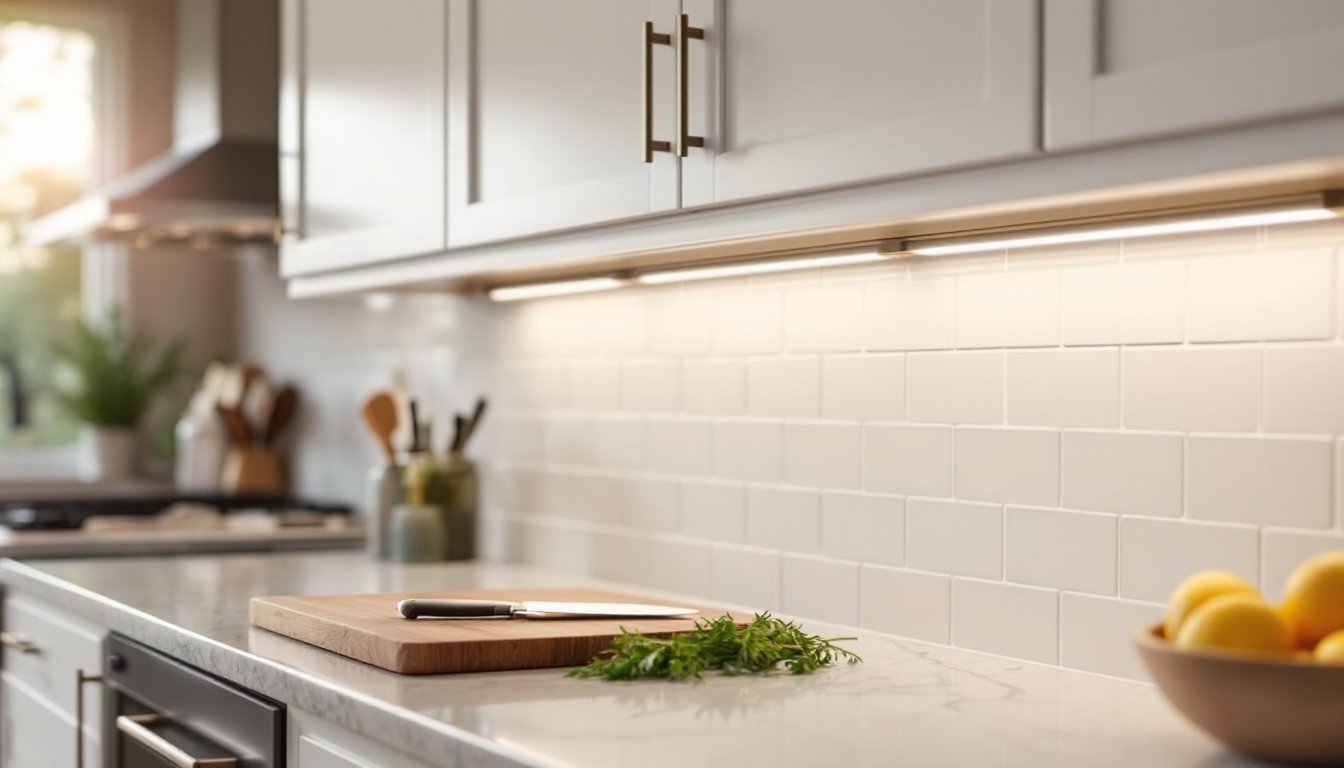
Pendant lighting has become one of the most versatile and impactful lighting solutions in modern homes. Unlike flush-mount ceiling fixtures that hug the ceiling or recessed cans that disappear entirely, pendants hang down on cords, chains, or rods, putting the fixture itself on display while delivering focused light exactly where it’s needed. They’re functional workhorses over kitchen islands and dining tables, but they also serve as sculptural focal points in entryways, bedrooms, and living areas. Whether someone’s renovating a dated kitchen or adding character to a bland hallway, understanding pendant lighting fundamentals helps homeowners make smarter choices about style, placement, and installation.
Table of Contents
ToggleKey Takeaways
- Pendant lighting hangs from the ceiling on cords, chains, or rods to deliver focused task lighting and serve as decorative focal points in kitchens, dining areas, entryways, and bedrooms.
- Proper placement and height matter: position pendants 24–30 inches apart over kitchen islands with the fixture bottom 30–36 inches above the countertop, and over dining tables at 30–34 inches above the surface.
- Pendant light fixtures come in multiple styles—mini pendants, drum, globe, industrial, and lantern—each suited to different rooms and lighting needs, from task lighting to ambient atmosphere.
- Scale your pendant to the space by using fixtures that are roughly two-thirds to three-quarters the length of an island or one-half to two-thirds the width of a dining table.
- LED bulbs are the standard for energy efficiency, but LED-rated dimmers must be used to prevent flickering and ensure compatibility with modern lighting systems.
- Install pendants on a ceiling junction box rated for the fixture’s weight, and hire a licensed electrician for heavier fixtures or complex wiring that may require permits under local building codes.
Understanding Pendant Lighting: Definition and Key Features
A pendant light is any light fixture that hangs from the ceiling on a suspension system, usually a cord, chain, metal rod, or cable. The defining characteristic is the gap between the ceiling and the light source itself, which can range from a few inches to several feet depending on ceiling height and application.
Unlike chandeliers, which typically feature multiple arms or tiers, most pendants consist of a single light source housed in a shade, globe, or cage. The shade material, glass, metal, fabric, or even woven natural fibers, affects both the light quality and the aesthetic. Transparent or open shades cast broader, ambient light, while opaque or downward-facing shades create focused task lighting.
Pendants connect to a ceiling junction box via a canopy that conceals the electrical connections. Most run on standard 120V household current and use E26 (medium base) bulbs, though some designer fixtures use proprietary or smaller bases. Dimmer compatibility depends on both the fixture design and the bulb type, LED bulbs require compatible LED dimmers to avoid flickering.
The adjustable height is a key advantage. Many pendants ship with extra cord or chain that can be shortened during installation, allowing the homeowner to fine-tune the fixture’s position. This adjustability makes pendants ideal for spaces with varying ceiling heights or specific task lighting needs.
Popular Types of Pendant Lights for Every Room
Mini pendants are compact fixtures, typically 5 to 12 inches in diameter, designed to be grouped in multiples. They work well over kitchen islands, where three evenly spaced mini pendants provide balanced task lighting without overwhelming the space. Because of their smaller size, they’re also suitable for tighter areas like breakfast nooks or small bathroom vanities.
Drum pendants feature a cylindrical shade, fabric, metal mesh, or perforated material, that diffuses light in all directions. These fixtures range from 12 to 24 inches in diameter and suit dining rooms, bedrooms, and living areas where ambient lighting is the priority. The drum shape softens the light, reducing glare while maintaining a clean, modern profile.
Globe or orb pendants encase the bulb in a spherical shade, often made of clear, frosted, or seeded glass. Globe styles gained traction in modern design circles for their minimalist appeal and versatility. They’re frequently used in entryways, over nightstands, or clustered at varying heights for visual interest.
Industrial pendants typically feature metal shades, often in a cone, dome, or cage configuration, with exposed hardware and a utilitarian aesthetic. These fixtures suit farmhouse kitchens, workshops, and loft-style spaces. The metal reflectors direct light downward, making them effective task lights over workbenches or prep areas.
Lantern pendants mimic traditional outdoor lanterns with a frame (metal or wood) and glass panels on multiple sides. They’re common in transitional and traditional homes, particularly in foyers and dining rooms where a more formal look is desired.
Multi-light or linear pendants suspend several lights along a single canopy or bar. Linear fixtures work especially well over long kitchen islands or rectangular dining tables, providing even coverage without the need to space individual pendants. Some designs allow for independent height adjustment of each light, adding a custom, staggered look.
Where to Use Pendant Lighting in Your Home
Kitchen Islands and Dining Areas
Kitchen islands are the most common application for pendant lighting, and for good reason. Pendants deliver focused task lighting directly onto the work surface, reducing shadows during food prep. For islands, the rule of thumb is to space pendants 24 to 30 inches apart and position them so the bottom of the fixture hangs 30 to 36 inches above the countertop. This height keeps the fixtures out of the sightline for someone standing at the island while ensuring adequate light coverage.
Over a dining table, pendants should be centered on the table itself, not just the room. The bottom of the fixture should hang 30 to 34 inches above the tabletop for a standard 30-inch-high table. If the table is in a high-traffic area or used for multiple purposes, err on the higher end to avoid head bumps. A single large pendant works for round or small square tables, while rectangular tables benefit from either a linear fixture or two to three pendants spaced evenly along the table’s length.
When selecting a pendant for a dining area, consider the light’s color temperature. Warm white (2700K to 3000K) creates a more inviting atmosphere for meals, while cooler temperatures can feel clinical. Dimmable fixtures add flexibility, allowing homeowners to adjust the mood from bright task lighting during cleanup to softer ambient light during dinner.
Entryways, Bedrooms, and Living Spaces
In an entryway or foyer, a statement pendant sets the tone for the entire home. The fixture should be proportional to the space: in a two-story foyer with a 9- to 12-foot ceiling, a pendant with a 20- to 30-inch diameter provides visual impact without overwhelming the area. The bottom of the fixture should hang at least 7 feet above the floor to allow clearance for anyone walking underneath, higher if the space is used frequently or if tall guests are common.
Bedrooms benefit from pendants as an alternative to bedside table lamps, freeing up nightstand space. Flanking the bed with matching pendants creates symmetry and provides dedicated reading light. Install them 18 to 24 inches out from the edge of the nightstand and adjust the height so the bottom of the shade is roughly at seated eye level when someone is propped up in bed, typically 24 to 30 inches above the nightstand surface.
Living rooms and reading nooks can incorporate pendants to define zones within an open floor plan. A pendant over a side table or in a corner creates a cozy, layered lighting scheme. Many interior designers recommend mixing pendant heights and styles in larger spaces to add depth and visual interest, but it’s important to maintain a cohesive material palette or finish to avoid a cluttered look.
How to Choose the Right Pendant Light for Your Space
Scale and proportion are the most critical factors. A common mistake is choosing a pendant that’s too small for the space. For a kitchen island, measure the island’s length and width, then aim for a total fixture width (all pendants combined, including spacing) that’s roughly two-thirds to three-quarters the length of the island. For a single pendant over a dining table, the fixture diameter should be one-half to two-thirds the width of the table.
Ceiling height also influences fixture choice. In rooms with 8-foot ceilings, stick to pendants with a shorter drop, 12 inches or less from canopy to bottom, to avoid a cramped feeling. Rooms with 10-foot or higher ceilings can accommodate longer drops and more dramatic fixtures. Adjustable-height pendants offer flexibility if ceiling height varies or if the homeowner wants to experiment with placement.
Light output and bulb type matter for function. For task lighting over a kitchen island, aim for 35 to 50 watts (incandescent equivalent) per pendant, or roughly 450 to 800 lumens per fixture. Dining areas can go lower, 25 to 40 watts equivalent per pendant, since ambient lighting is more important than task lighting. LED bulbs are the standard now for energy efficiency and longevity, but pay attention to dimmer compatibility if planning to install a dimmer switch.
Style should complement, not compete with, existing finishes and furnishings. If the kitchen has brushed nickel cabinet hardware, consider pendants with matching or complementary metal finishes. In eclectic spaces, mixing metals is acceptable, pairing brass pendants with stainless appliances can work if there’s a unifying element like similar shapes or a cohesive color scheme.
Shade material affects both light quality and maintenance. Glass shades show dust and fingerprints but are easy to clean and don’t fade. Fabric shades diffuse light beautifully but may discolor over time, especially in kitchens where grease and moisture are present. Metal shades are durable and low-maintenance, but they can get hot to the touch if the bulb isn’t adequately ventilated.
Installation Tips and Height Guidelines
Before installing any pendant, confirm that the existing ceiling junction box is rated to support the fixture’s weight. Standard plastic “old work” boxes are rated for fixtures up to 50 pounds, but heavier pendants, especially those with glass or metal shades, may require a metal box or a fan-rated box secured directly to a ceiling joist. If there’s any doubt, replace the box before hanging the fixture.
Most pendant installations are straightforward for anyone comfortable with basic electrical work. Turn off power at the breaker, confirm it’s off with a non-contact voltage tester, then remove the old fixture. Connect the pendant’s wires to the house wires, black to black (hot), white to white (neutral), and green or bare copper to the ground. Use wire nuts rated for the wire gauge, and secure all connections inside the junction box before attaching the canopy.
Adjusting cord or chain length is easier during installation than after the fact. Lay out the pendant on the floor and measure from the canopy to the desired bottom height, accounting for ceiling height and the fixture’s intended use. For cord pendants, most manufacturers include a cord grip or strain relief inside the canopy, loosen it, adjust the cord, then retighten. For chain pendants, remove links with pliers, but keep the extras in case the fixture is relocated to a room with a higher ceiling later.
If installing multiple pendants on the same circuit, check the total wattage against the circuit’s capacity. A standard 15-amp, 120V circuit can handle up to 1,800 watts, but it’s wise to stay below 80% of that, around 1,440 watts, to avoid tripping breakers. Three LED pendants using 10 watts each draw only 30 watts total, leaving plenty of headroom.
Dimmer installation requires a compatible switch. For LED pendants, use an LED-rated dimmer to prevent buzzing, flickering, or reduced bulb lifespan. If the existing switch box lacks a neutral wire (common in older homes), options include a smart dimmer that doesn’t require a neutral or running a new wire from the panel, an electrician may be necessary for the latter.
Always wear safety glasses when working overhead, and use a sturdy ladder with a helper to support heavier fixtures during installation. If the pendant weighs more than 50 pounds or if the installation involves running new wiring or replacing a junction box, pulling a permit and hiring a licensed electrician is the safer, and often legally required, route. Local codes vary, so check with the building department before starting work.
Once installed, step back and evaluate the light distribution. If shadows are too harsh or light pools are uneven, consider swapping to a higher-lumen bulb or adding a diffuser. Many design trends emphasize layered lighting, so pendants should work in tandem with recessed lights, under-cabinet strips, or wall sconces to create a balanced scheme.