Track lighting pendants combine the flexibility of track systems with the focused ambiance of pendant fixtures. They’re not just trendy, they solve a practical problem: how to get adjustable, stylish lighting without committing to fixed junction boxes or rewiring entire rooms. Whether updating a kitchen island, highlighting artwork, or creating task lighting in a home office, track pendants deliver versatility without the permanence of traditional hardwired fixtures. This guide walks through what they are, why they work, how to choose the right system, and how to install them yourself.
Table of Contents
ToggleKey Takeaways
- Track lighting pendants offer flexible, adjustable fixture placement without rewiring, making them ideal for kitchens, home offices, and renters who need customizable lighting solutions.
- The three main track types—H-type, J-type, and L-type—are not cross-compatible, so confirming your track profile before purchasing adapters or pendants is essential to avoid installation failures.
- Track lighting pendants can be adjusted along the rail, swapped out entirely, or repositioned as your furniture and layout evolve, providing both aesthetic versatility and cost savings compared to multiple hardwired fixtures.
- Proper installation requires mounting tracks into ceiling joists (not just drywall anchors), turning off power at the breaker, and calculating total wattage to stay within the track’s maximum rating, typically 300–500 watts for residential systems.
- Track pendants excel at task lighting in kitchens over islands (spaced 24–30 inches apart) and work equally well in dining rooms, home offices, and living areas as accent lighting or workspace illumination.
What Are Track Lighting Pendants and How Do They Work?
Track lighting pendants are pendant fixtures that mount onto track lighting rails instead of traditional ceiling boxes. The track itself is hardwired to a ceiling junction box and carries electrical current along its length. Pendants attach to the track via specialized adapters that click or twist into place, drawing power directly from the rail.
Most systems use a low-voltage (12V or 24V) transformer housed in the track head, though some residential systems run on standard 120V line voltage. The track acts as both a power conduit and a mounting surface, letting homeowners reposition pendants along the rail without additional wiring.
The adapter mechanism varies by manufacturer. H-type, J-type, and L-type tracks are the three standard configurations in residential use, and they’re not cross-compatible. Each pendant adapter must match the track profile, forcing an H-type pendant onto a J-type track won’t work and may damage the fixture or create an electrical hazard.
Unlike fixed pendants that hang from a single point, track pendants can be slid along the rail, swapped out, or removed entirely. This modularity makes them ideal for renters, spaces with evolving layouts, or anyone who likes to tweak their lighting setup without calling an electrician.
Benefits of Using Track Lighting Pendants in Your Home
Flexibility tops the list. Track pendants let users adjust fixture placement as furniture moves, art rotates, or tasks change. A homeowner can start with two pendants over a breakfast bar and add a third later without touching wiring.
Cost efficiency follows close behind. Installing three separate hardwired pendant lights requires three junction boxes, three sets of wire runs, and potentially opening up ceiling drywall. A single track run handles multiple fixtures with one electrical connection.
Aesthetic versatility matters too. Modern track systems have shed the industrial look of the 1980s. Sleek rails in brushed nickel, matte black, or white blend into contemporary, farmhouse, and transitional interiors. Homeowners can mix pendant styles along the same track, a globe over the sink, a drum shade over the table, without visual conflict, as long as finishes coordinate.
Track pendants also excel at task lighting. They focus light exactly where it’s needed: over a kitchen island, a craft table, or a reading nook. Adjustable heads and the ability to slide fixtures along the rail mean the lighting adapts to the work, not the other way around.
Finally, they’re renter-friendly. Hardwiring permanent fixtures in a rental often violates lease terms or isn’t worth the effort for a temporary space. Track systems mount to existing ceiling boxes and come down cleanly when it’s time to move, leaving minimal evidence behind.
Choosing the Right Track Lighting Pendant System
Start by identifying the track type already installed, if retrofitting. The three standards, H, J, and L, have different rail profiles and conductor positions. Check the manufacturer’s label on the existing track or measure the rail’s cross-section. If starting from scratch, H-type (also called Halo) is the most common in residential settings and offers the widest range of compatible fixtures.
Voltage matters next. Low-voltage systems (12V or 24V) require a transformer but allow for smaller, more delicate bulbs and fixtures. They’re popular for accent lighting and small pendants. Line-voltage systems (120V) are simpler, no transformer to hide or maintain, and support a broader range of bulb types and wattages. For kitchen islands or dining tables where brighter output is needed, 120V typically makes more sense.
Consider load capacity. Each track has a maximum wattage rating, often 300 to 500 watts for residential rails. Add up the wattage of all planned fixtures, including any existing track heads or spotlights. Exceeding the limit risks tripping breakers or overheating the track.
Pendant drop length affects both function and proportion. Standard cables or rods range from 12 inches to 72 inches. For an 8-foot ceiling, a 12- to 18-inch drop usually works over counters or tables. Vaulted or 10-foot ceilings can handle 36- to 48-inch drops without overwhelming the space. Many systems offer adjustable cables or threaded rods that can be shortened during installation.
Finally, verify dimmer compatibility. Not all track systems play nice with standard dimmers, especially LED fixtures. Check whether the track head or transformer supports dimming, and match it to a compatible dimmer switch. Incompatible pairings cause flickering, buzzing, or shortened bulb life.
Track Types and Compatibility Considerations
The three main track profiles, H-type, J-type, and L-type, are mechanically incompatible. An adapter designed for one won’t fit the others, even if the electrical specs match.
H-type (Halo) is the most widely available. It’s used by manufacturers like Juno, Halo, and many home-center house brands. The rail has a rounded profile with two parallel conductors.
J-type (Juno) tracks feature a squared-off rail with conductors positioned differently. Juno-branded systems often use this profile, though some Juno products now use H-type for broader compatibility.
L-type (Lightolier) is less common in residential work but still found in older homes and commercial retrofits. The rail has a distinct T-shaped cross-section.
When buying pendants, confirm compatibility with the track system. Many manufacturers label fixtures as “H-compatible” or include multiple adapters in the box. If unsure, bring the track model number or a photo of the rail’s end profile to the lighting supplier. Mixing incompatible parts won’t just fail to work, it may create a shock hazard if conductors align incorrectly.
Installation Tips for Track Lighting Pendants
Safety first: Turn off power at the breaker, not just the wall switch. Verify it’s off with a non-contact voltage tester before touching wires. Wear safety glasses when working overhead, drywall dust and debris will fall.
If installing a new track system, locate the ceiling joists with a stud finder. Track rails must be screwed into joists or blocking, not just drywall anchors, to support the fixture weight. Standard residential joists run 16 or 24 inches on center. If the desired track path runs perpendicular to joists, secure the rail at each crossing joist. If it runs parallel between joists, install blocking between joists or use a track-specific mounting bar that spans joist bays.
Wire the track head to the existing junction box following the manufacturer’s diagram. Most systems use standard black (hot), white (neutral), and green or bare (ground) wiring. Secure connections with wire nuts and push excess wire into the box before mounting the track head. Mounting screws should bite into the electrical box or ceiling structure, not just drywall.
Once the track is powered and secured, snap or twist the pendant adapters into the rail. Alignment grooves inside the track ensure proper contact with conductors. Most adapters require a quarter-turn or a push-and-click motion. If an adapter doesn’t lock smoothly, don’t force it, double-check track type compatibility.
Adjust pendant drop length before energizing the system. Cable systems typically have a clamp or set screw at the adapter: loosen it, slide the cable to the desired height, and retighten. Threaded rod pendants require unscrewing sections or cutting the rod to length with a hacksaw (deburr the cut end with a file to avoid damaging internal wiring).
Restore power and test each fixture. If pendants flicker or don’t illuminate, turn off the breaker and verify that adapter contacts are seated fully in the track. If one pendant works but another doesn’t, swap their positions to isolate whether the issue is the fixture or a dead spot in the track.
Common pitfall: Overloading the track. If adding pendants to a track with existing spotlights, recalculate total wattage. LED bulbs help here, a 10W LED produces similar output to a 60W incandescent, leaving more headroom on the track’s rating.
Design Ideas and Room-Specific Applications
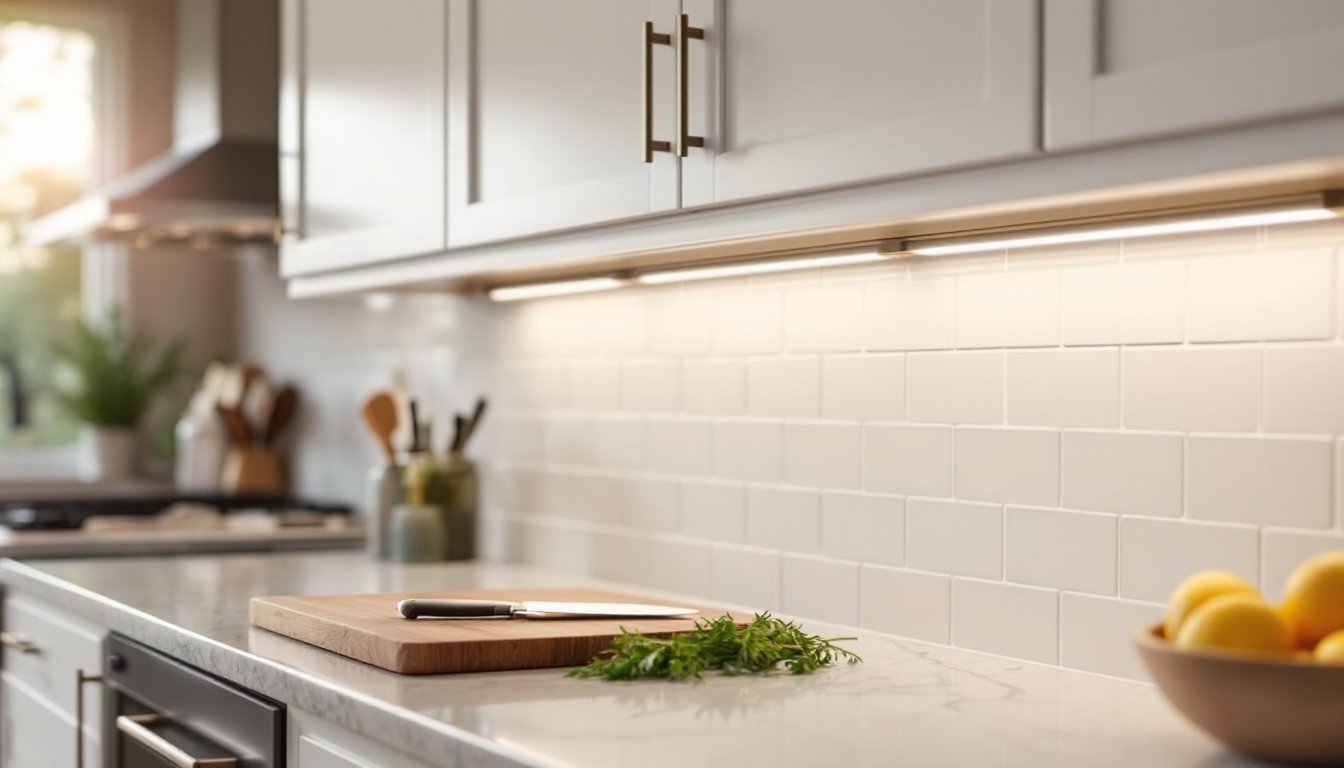
Kitchens are the most popular application. Track pendants over islands or peninsulas provide focused task lighting without blocking sightlines. Space pendants 24 to 30 inches apart for even illumination on a standard 6-foot island. Choose shades that direct light downward, metal cones, drum shades with opaque tops, or clear glass with exposed Edison bulbs for a warmer look. Pairing track pendants with modern farmhouse dining fixtures creates a cohesive aesthetic between kitchen and dining areas.
In dining rooms, a single track down the center of the table lets homeowners adjust pendant spacing as the table expands or contracts with leaves. Three mini pendants along a track replace the traditional single chandelier, adding visual interest and flexibility.
Home offices and craft rooms benefit from repositionable task lighting. A track along the front edge of a desk or workbench allows users to slide pendants toward the current project. Combine with bedroom lighting strategies if the workspace shares a room, using dimmers to balance task and ambient needs.
Living rooms use track pendants as accent lighting. Position them to highlight artwork, bookshelves, or architectural features. Narrow-beam pendants with adjustable heads act like spotlights but with more style than traditional track heads.
For outdoor covered patios, weatherproof track systems extend pendant flexibility outside. Look for tracks rated for wet or damp locations (UL listing will specify). Outdoor track lighting systems often use sealed adapters and corrosion-resistant finishes to handle humidity and temperature swings.
Design tip: Match pendant finishes to other hardware in the room, cabinet pulls, faucets, or door hinges, for a polished look. If mixing finishes, stick to a maximum of two metal tones (e.g., matte black track with brass pendants).
For those exploring broader styles of lighting, track pendants fit into contemporary, industrial, and transitional schemes. Avoid overly ornate shades: the track itself is a visible element, so simpler pendant designs usually read better.
Conclusion
Track lighting pendants deliver the best of both worlds: the targeted light of a pendant with the adaptability of a track system. They’re straightforward to install for anyone comfortable with basic electrical work, and they solve layout challenges that stump traditional fixtures. With the right track type, appropriate voltage, and thoughtful placement, they can upgrade a kitchen, workspace, or living area without the commitment, or cost, of hardwired lighting.