A small bedroom doesn’t have to feel like a cave. The right lighting transforms a cramped 10×10 box into a cozy, functional retreat, whether it’s used for sleep, reading, or doubling as a home office. But in compact spaces, every fixture competes for real estate. Overhead flush mounts alone won’t cut it, and bulky table lamps eat up precious nightstand space. The solution? Strategic layering, smart fixture choices, and bulb selection that works with the room’s dimensions instead of against them. This guide breaks down practical lighting ideas that maximize brightness and usability without cluttering the floor plan.
Table of Contents
ToggleKey Takeaways
- Layered lighting combining ambient, task, and accent sources is essential for small bedroom lighting ideas, allowing flexibility without cluttering the compact space.
- Wall-mounted sconces and pendant lights eliminate the need for bulky nightstand lamps, freeing up surface space in tight quarters.
- Warm color temperatures between 2700K–3000K promote relaxation, while dimmable LED bulbs with high CRI ratings (90+) enhance both comfort and color accuracy in small bedrooms.
- Strategic fixture placement centered over the room’s usable floor space prevents shadows and ensures even light distribution without overwhelming the compact layout.
- LED bulbs cut heating by 80–90% compared to incandescent options, making them ideal for small bedrooms where temperature control is critical.
Why Lighting Matters in Small Bedrooms
Lighting impacts how a small bedroom feels and functions. Poor lighting makes tight spaces feel even smaller, dim corners create visual dead zones, and harsh overhead glare flattens the room. Proper illumination, on the other hand, opens up the space by eliminating shadows and highlighting vertical elements like walls and ceiling height.
From a functional standpoint, small bedrooms often serve multiple roles. They’re sleeping quarters, dressing areas, reading nooks, and sometimes workspaces. Each activity demands different light levels: 3,000–4,000 lumens for general ambient lighting in a 100–120 sq ft bedroom, task lighting around 400–600 lumens for reading, and softer accent lighting to create mood. Without layered sources, occupants end up either straining their eyes or living in a washed-out glare.
Energy efficiency also matters more in compact rooms. Smaller spaces heat up faster, so fixtures that run cool, LED bulbs, keep the room comfortable while cutting electric bills. LEDs also fit into slimmer fixtures, which is critical when every inch of ceiling and wall clearance counts.
Layered Lighting: The Secret to a Well-Lit Small Bedroom
Relying on a single overhead fixture is the most common mistake in small bedroom design. Layered lighting combines three types: ambient (general overhead), task (focused for activities), and accent (decorative or mood). Each layer serves a purpose, and together they create flexibility without overloading the space with fixtures.
Ambient lighting establishes the baseline. A semi-flush or flush-mount ceiling fixture works in rooms with 8-foot ceilings, while those with 9+ feet can handle a small pendant. Look for fixtures with diffusers to spread light evenly, bare bulbs create harsh shadows. Designers working on small-space bedroom layouts often recommend dimmable overhead fixtures so occupants can adjust brightness based on time of day.
Task lighting targets specific activities. Bedside reading lights, vanity lighting, or a small desk lamp fall into this category. Instead of table lamps that occupy nightstand real estate, consider wall-mounted options or clip-on fixtures that attach to headboards. Aim for 300–500 lumens at the reading surface, roughly equivalent to a 40–60W incandescent bulb (or 6–10W LED).
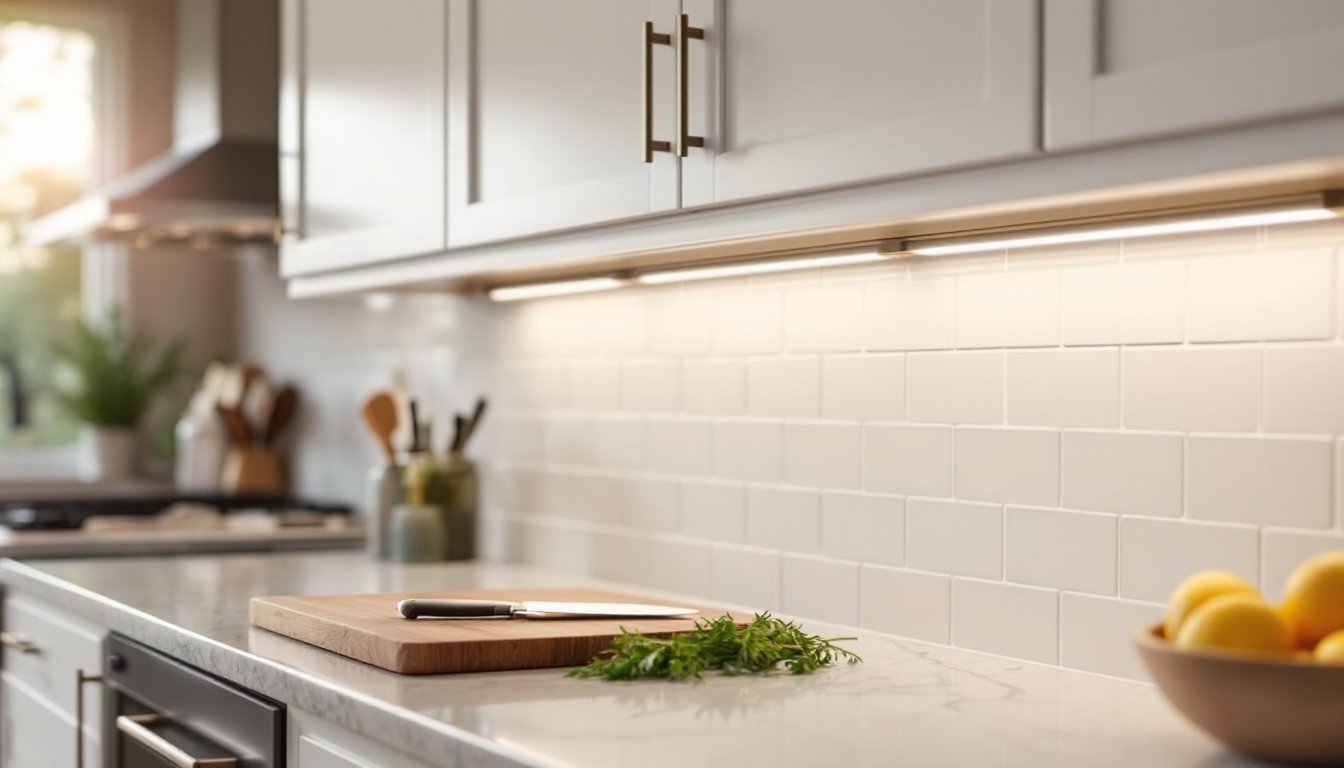
Accent lighting adds depth. LED strip lights tucked under floating shelves, behind headboards, or along crown molding create a soft glow that makes walls recede visually. This trick is borrowed from tiny home design strategies, where vertical lighting draws the eye upward and counteracts low ceilings. Keep accent lighting warm-toned (2700K–3000K) to avoid a clinical feel.
Space-Saving Lighting Fixtures for Compact Rooms
In a small bedroom, fixture footprint matters as much as light output. The goal is maximum illumination with minimal intrusion into usable space. Wall-mounted and ceiling-hung options free up surfaces, while sleek profiles keep sight lines open.
Wall-Mounted Sconces and Swing Arm Lamps
Hardwired wall sconces installed 60–66 inches from the floor eliminate the need for nightstand lamps entirely. Swing arm models offer adjustability, extend them over the bed for reading, then tuck them flat against the wall during the day. Look for sconces with backplates under 5 inches wide to avoid a bulky appearance.
Installation requires running electrical wire inside the wall, which means cutting drywall and possibly adding a junction box. If the bedroom shares a wall with another room or hallway, fishing wire is straightforward. If it’s an exterior wall with insulation, the job gets messier. In either case, work must meet NEC (National Electrical Code) standards, particularly Article 210 for branch circuits. Hire a licensed electrician if the circuit needs upgrading or if existing wiring is aluminum (common in homes built 1965–1973).
Plug-in swing arm lamps offer a no-demo alternative. Cord covers painted to match the wall keep the look clean. Mount them to studs using #8 wood screws rated for the fixture’s weight, most sconces weigh 2–5 lbs, well within drywall anchor limits, but studs provide better long-term support, especially if the arm gets adjusted frequently.
Pendant Lights as Bedside Alternatives
Hanging pendant lights as bedside fixtures is a move borrowed from boutique hotel design. Instead of two table lamps, suspend pendants from ceiling junction boxes positioned 18–24 inches out from the wall, centered over each nightstand. This frees up the entire nightstand surface for books, phones, or water glasses.
Choose pendants with shades no wider than 10–12 inches to maintain proportion in a small room. The bottom of the shade should hang 24–30 inches above the mattress, high enough to avoid head bumps when sitting up, low enough to direct light downward for reading. Adjustable cord kits let occupants fine-tune the height.
Hardwiring pendants requires a ceiling box rated for the fixture’s weight. Most decorative pendants weigh under 5 lbs, so a standard plastic box works. Heavier fixtures (metal, glass, or multi-bulb) need a metal fan-rated box. If there’s attic access above, running new wire is a weekend DIY project for someone comfortable with basic electrical work. Without attic access, you’re cutting into the ceiling, at that point, call a pro unless you’re prepared to patch and repaint.
Strategic Placement Tips to Maximize Light and Space
Fixture placement shapes how light moves through the room and how large the space feels. In small bedrooms, placement mistakes amplify quickly, one poorly positioned sconce can create awkward shadows or make furniture arrangement impossible.
Position ambient ceiling fixtures centered in the room’s usable floor space, not the geometric center. If a bed dominates one wall, the fixture should center over the remaining open area. This prevents shadows from falling directly on the bed and ensures even light distribution across walking paths.
Place task lighting based on activity zones. Bedside lights should align with the midpoint of each pillow, roughly 48–54 inches from the floor (measured to the bulb, not the base). Desk lamps in small bedroom/office combos belong on the side opposite the dominant hand, right side of the desk for lefties, left side for righties, to avoid casting hand shadows on work.
For general bedroom lighting strategies, designers recommend avoiding fixtures directly above the bed unless they’re dimmable. Bright overhead light shining down on someone lying flat is uncomfortable, and many people read or use devices in bed. Side-mounted or angled fixtures provide better illumination without glare.
Mirror placement interacts with lighting. A mirror opposite a window or wall sconce doubles perceived light by reflecting it back into the room. This trick works particularly well in compact bedrooms with dark furniture, where reflective surfaces counteract absorption. Position mirrors to avoid reflecting the bulb directly, aim for reflected glow, not a blinding hotspot.
Keep fixture clearances in mind. Wall sconces need 6–8 inches of clearance from door frames and corners to avoid looking cramped. Pendants shouldn’t hang in the path of travel, keep them at least 30 inches from the closet door swing or any other frequently opened door.
Color Temperature and Bulb Selection for Small Bedrooms
Bulb selection affects both the quality of light and the perceived size of the room. The wrong color temperature makes a small bedroom feel either clinical or dingy, and incorrect wattage either strains eyes or creates glare.
Color temperature is measured in Kelvin (K). Bedrooms benefit from warm white (2700K–3000K), which mimics incandescent bulbs and promotes relaxation. Cool white (4000K+) feels sterile and suppresses melatonin production, fine for a garage workshop, wrong for a sleep space. Some occupants prefer 3500K (neutral white) for morning routines or makeup application, which is where smart bulbs with adjustable color temperature earn their keep. Brands like Philips Hue or LIFX let users shift from energizing 4000K in the morning to calming 2700K at night, all from one fixture.
Wattage equivalents matter when switching from incandescent to LED. A 9W LED produces the same light as a 60W incandescent (roughly 800 lumens). For small bedrooms, total ambient light should hit 2,000–3,000 lumens across all fixtures, about two to three 60W-equivalent bulbs, depending on ceiling height and wall color. Task lighting adds another 400–600 lumens per fixture.
CRI (Color Rendering Index) affects how colors look under artificial light. Bulbs with CRI 90+ render skin tones, fabrics, and paint colors accurately, which matters in bedrooms used for dressing or video calls. Cheap LEDs often sit around CRI 80, which gives everything a slightly washed-out look. According to experts at Apartment Therapy, higher-CRI bulbs make small spaces feel more vibrant without adding actual brightness.
Dimmability prevents over-lighting. Not all LED bulbs dim smoothly, some flicker or buzz on dimmer switches designed for incandescent bulbs. Look for bulbs labeled “dimmable” and pair them with an LED-compatible dimmer (often labeled ELV for electronic low voltage). Installing a dimmer requires swapping out the existing switch, a straightforward task: kill power at the breaker, remove the old switch, connect the dimmer’s wires (typically black to black, white to white, ground to ground), and secure it in the box. If unsure about wiring or if the box is metal and grounding is unclear, hire an electrician.
Energy efficiency compounds in small spaces. LEDs produce 80–90% less heat than incandescent bulbs, which keeps the bedroom cooler and reduces HVAC load. A bedroom with five 60W incandescent bulbs generates roughly 1,000 BTUs/hour, enough to noticeably warm a 100 sq ft room. Five 9W LEDs produce closer to 150 BTUs/hour. Resources at The Spruce note that this difference is especially noticeable in poorly ventilated bedrooms or homes without central air.
For those exploring eco-conscious upgrades, pairing efficient bulbs with sustainable lighting fixtures reduces both energy use and material waste over the fixture’s lifespan. Look for bulbs rated for 15,000–25,000 hours, at three hours of daily use, that’s 13–22 years before replacement.
Finally, consider bulb shape and beam angle. A19 bulbs (standard shape) work in most fixtures, but BR30 or PAR bulbs with directional beams suit recessed cans or track lighting. In small bedrooms, wide flood beams (90–120 degrees) distribute light evenly, while narrow spots (25–40 degrees) create pools of light that can make the room feel choppy. Designers at Decoist recommend flood beams for ambient fixtures and medium floods (60 degrees) for task lighting.