Installing outdoor motion lighting is one of the smartest upgrades a homeowner can tackle. It boosts security, cuts energy costs, and makes navigating your property after dark safer and more convenient. Whether you’re mounting a floodlight over the garage or adding pathway sensors near the front porch, the project is straightforward enough for most DIYers with basic electrical know-how. This guide walks through how motion-activated outdoor lights work, why they’re worth the investment, what to look for when buying, and how to install and maintain them without calling in a pro.
Table of Contents
ToggleKey Takeaways
- Outdoor motion lighting reduces break-ins by 39% while cutting energy costs by up to 90% compared to traditional always-on lighting systems.
- PIR sensors detect heat signatures and trigger lights only when motion occurs, with adjustable ranges (15–70 feet) and detection angles (120–240 degrees) to minimize false alarms.
- Choose hardwired 120V fixtures for unlimited runtime or battery-solar models for quick installation; prioritize IP65+ ratings and corrosion-resistant materials for outdoor durability.
- Mount motion lights 8–10 feet high, angled downward 20–30 degrees, away from heat sources like AC units to ensure accurate sensor performance and security coverage.
- Regular maintenance—cleaning sensor lenses, checking wire connections, and replacing defective PIR sensors every 5–7 years—keeps outdoor motion lighting systems reliable and effective long-term.
What Is Outdoor Motion Lighting and How Does It Work?
Outdoor motion lighting uses passive infrared (PIR) sensors to detect heat signatures from moving objects, people, pets, or vehicles, within a defined range. When the sensor picks up motion, it triggers the light to turn on for a preset duration, typically 30 seconds to 10 minutes, then switches off automatically.
Most PIR sensors have an adjustable detection range (usually 15 to 70 feet) and a field of view between 120 and 240 degrees. Higher-end units offer dual-sensor arrays or microwave Doppler radar for more accurate triggering and fewer false alarms from wind-blown branches or small animals.
The technology is simple: an infrared detector monitors ambient temperature. When a warm body crosses into the sensor zone, the change in heat triggers a relay that closes a circuit, powering the light. Some newer models integrate photoelectric sensors (dusk-to-dawn cells) so the motion function only activates after sunset, saving bulb life and electricity.
Many motion lights now include LED bulbs rated for 25,000+ hours, reducing the frequency of bulb changes. Smart versions connect via Wi-Fi or Bluetooth, letting homeowners adjust sensitivity, duration, and scheduling from a mobile app. These are handy if the light keeps tripping from a busy street or wandering neighborhood cats.
Top Benefits of Installing Motion-Activated Outdoor Lights
Enhanced Home Security and Deterrence
Motion lighting outdoor setups are proven deterrents. A 2023 study by the Urban Institute found that well-lit properties experienced 39% fewer break-ins than poorly lit neighbors. Burglars avoid homes where sudden illumination increases their risk of being seen.
Install floodlights with PIR sensors above entry doors, garage doors, and ground-floor windows. Position them 8 to 10 feet high and angle downward to cover walkways and driveways without blinding passersby. For maximum deterrent effect, pair motion lights with visible security cameras: the combination signals active monitoring.
Smart motion lights can send push notifications when triggered, letting homeowners check live camera feeds from anywhere. This real-time alert system adds a layer of security without the monthly cost of professional monitoring.
Energy Efficiency and Cost Savings
Traditional dusk-to-dawn lights burn for 10 to 12 hours nightly, adding up fast. A 100-watt incandescent floodlight running year-round costs roughly $50 in electricity annually (at $0.14/kWh). Motion-activated LED equivalents (15 watts) that illuminate only when needed drop that figure to under $5.
LEDs also handle the thermal stress of frequent on-off cycles better than incandescents or CFLs, which degrade faster with rapid switching. Expect LED motion lights to last 15 to 20 years in typical residential use.
Some models feature dimming modes: the light stays at 10–20% brightness and ramps to full output when motion is detected. This hybrid approach maintains a low-level ambient glow for safety while conserving energy. It’s a practical middle ground for front porches or side yards where total darkness feels too stark.
Choosing the Right Outdoor Motion Lighting for Your Home
Start by matching the fixture to the application. Floodlights with twin or triple LED heads work well for driveways, backyards, and building perimeters, delivering 1,800 to 3,000 lumens. Wall-mounted sconces (600–1,200 lumens) suit entryways and porches. Pathway bollards with integrated PIR sensors (100–300 lumens) light walkways without glare.
Check the IP (Ingress Protection) rating. For exposed locations, look for IP65 or higher, which protects against rain, snow, and dust. Coastal areas demand corrosion-resistant housings, aluminum or powder-coated steel, not bare plastic.
Sensor adjustability is crucial. Quality units let you dial in sensitivity, range, and timer duration. Cheap sensors often lack fine-tuning, leading to lights that trip constantly or miss actual motion. If you live near a busy sidewalk or have large pets, adjustable sensitivity prevents nuisance activations.
For smart home integration, choose fixtures compatible with existing ecosystems (Alexa, Google Home, Apple HomeKit). Z-Wave and Zigbee models work through hubs like SmartThings or Hubitat. Wi-Fi-based lights are simpler to set up but may experience latency or require strong outdoor signal coverage.
Consider color temperature: 3000K (warm white) feels inviting near entryways: 5000K (daylight) enhances visibility and color accuracy for security zones. Some homeowners prefer outdoor track lighting for accent zones, then reserve motion lights for functional areas.
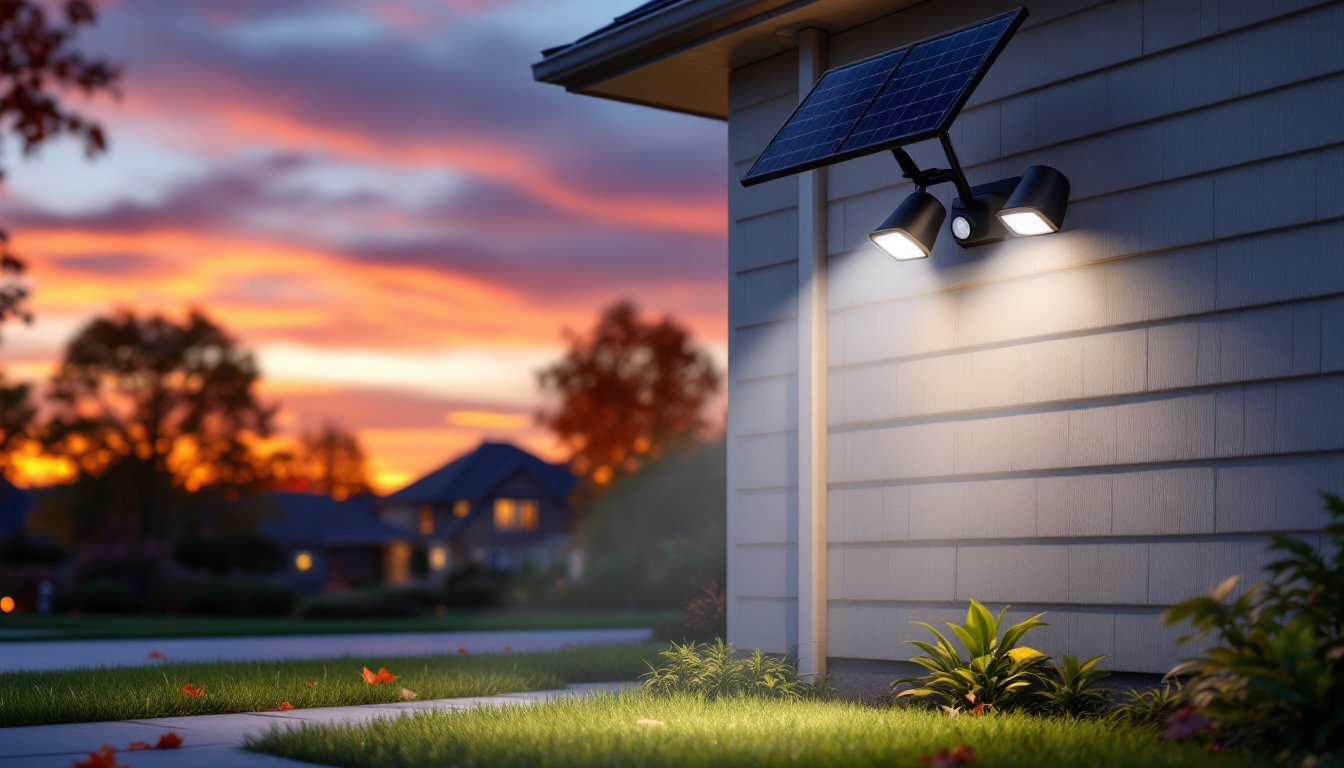
Power source matters. Hardwired 120V fixtures offer unlimited runtime and higher lumen output, but require electrical boxes and may need permits. Battery-powered or solar models install in minutes with no wiring, ideal for sheds, fences, or rental properties. Solar units need 6+ hours of direct sun daily to charge reliably: shaded yards may disappoint.
Installation Tips for DIY Outdoor Motion Lights
Before starting, turn off power at the breaker and verify with a non-contact voltage tester. Most jurisdictions require a permit for new exterior circuits: replacing an existing fixture on the same box typically doesn’t. Check local codes.
Hardwired installation follows these steps:
- Remove the old fixture. Unscrew the mounting plate, disconnect wire nuts, and pull out the old light.
- Inspect the junction box. Confirm it’s rated for outdoor use (weatherproof or WP box). If the existing box is metal and rusted, replace it with a PVC or corrosion-resistant metal enclosure.
- Attach the mounting bracket. Align it to the box holes and secure with screws. Many motion lights use a universal keyhole or crossbar mount.
- Connect wiring. Match black (hot) to black, white (neutral) to white, and green or bare copper (ground) to the fixture ground. Twist wire nuts clockwise until snug, then tug gently to confirm.
- Seal penetrations. Apply a bead of silicone caulk around the mounting plate edge to prevent water intrusion behind the fixture.
- Restore power and test. Flip the breaker, then trigger the sensor by walking through the detection zone. Adjust range, sensitivity, and timer dials per the manual.
For battery or solar units, use exterior-grade screws (stainless steel or coated deck screws) and anchors if mounting to siding or masonry. Position solar panels to face south (in the Northern Hemisphere) and avoid tree shade.
Height and angle are critical. Mount floodlights 8–10 feet high, angled down 20–30 degrees. Too high reduces sensitivity: too low invites tampering. Avoid aiming sensors toward heat sources like dryer vents, AC condensers, or sun-warmed walls, which cause false triggers.
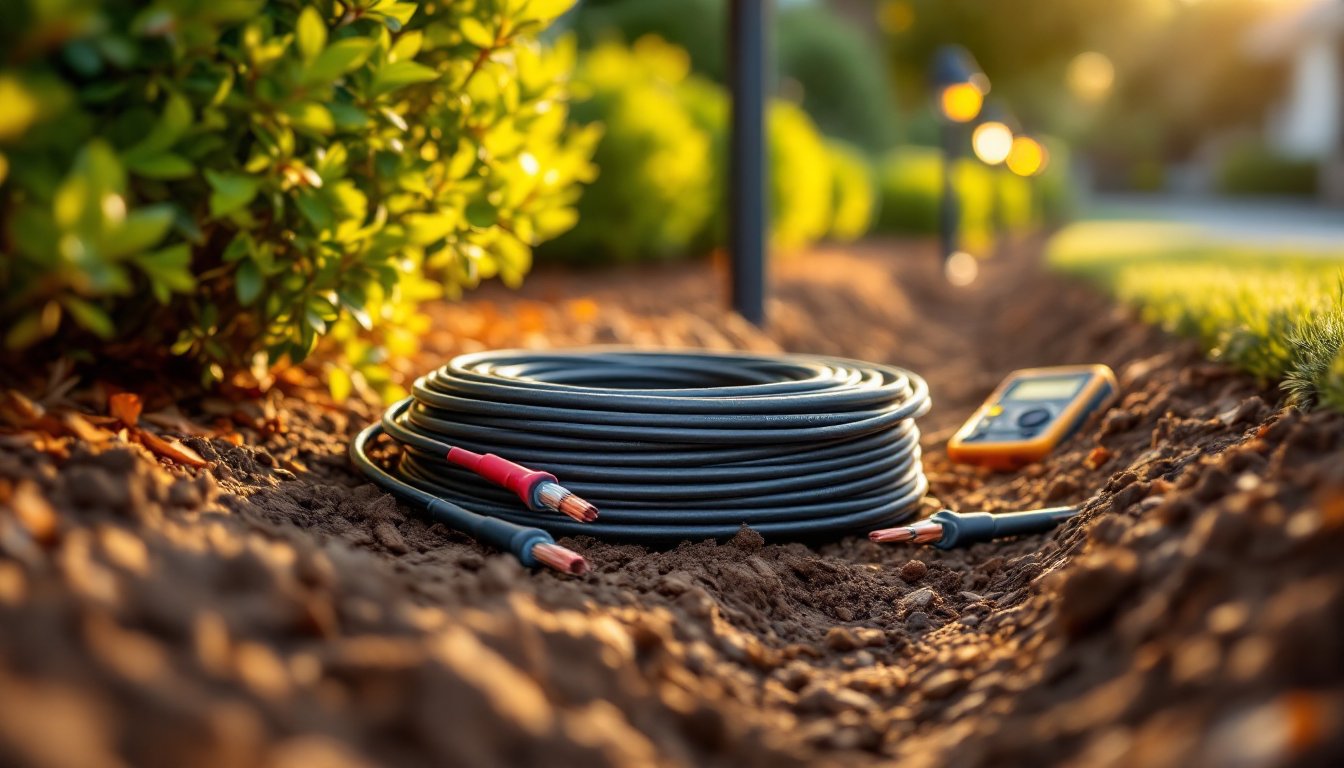
If adding a new circuit, use 12-gauge NM-B or UF-B cable for 20-amp circuits, 14-gauge for 15-amp. Outdoor runs require conduit in most areas, rigid PVC or EMT depending on exposure. Bury UF cable at least 18 inches deep (check NEC Article 300 and local amendments).
PPE reminder: Wear safety glasses, work gloves, and insulated tools rated for electrical work. If you’re uncomfortable working with live wiring, hire a licensed electrician. According to research from smart home experts, many homeowners opt for plug-and-play smart fixtures to avoid permit and wiring hassles.
Common Troubleshooting and Maintenance Best Practices
Light won’t turn on: Confirm the breaker is on and the bulb is seated properly. Check that the photocell isn’t fooled by nearby porch lights, cover it temporarily to test. If the sensor lens is dirty, wipe it with a damp cloth: grime and spider webs reduce range.
False triggers: Lower sensitivity or narrow the detection angle. Moving branches, passing cars, or heat from nearby vents can trip sensors. Reposition the fixture or add physical barriers (trim foliage, redirect the sensor).
Light stays on constantly: The photocell may be defective or the fixture is wired incorrectly (hot and neutral reversed). If the manual override switch is engaged, disengage it. Some units have a test mode, ensure it’s switched to auto.
Flickering or dim output: Loose wire connections or voltage drop from long cable runs cause this. Check all wire nuts and tighten screws on the mounting plate. If dimming persists, measure voltage at the fixture: it should read within 5% of nominal (114–126V for a 120V circuit).
Routine maintenance: Every six months, clean the sensor lens and housing. Inspect caulk seals and replace if cracked. Tighten mounting screws, thermal expansion and vibration can loosen them. For solar models, wipe the panel with glass cleaner and check battery health annually.
Replace PIR sensors if they become erratic or unresponsive after 5–7 years. Most modular fixtures allow sensor swaps without replacing the entire unit. LED drivers (the internal power supply) can fail before the LEDs do: if the light flickers or won’t ignite, the driver is often the culprit.
Keep firmware updated on smart models. Manufacturers release patches for connectivity bugs and security vulnerabilities. Many experienced DIYers have found that upgrading outdoor smart lighting significantly improves both reliability and features over older analog systems.
For comprehensive outdoor illumination strategies, consider integrating motion lighting with broader landscape lighting designs that balance security, aesthetics, and energy use. Motion lights handle high-traffic and vulnerable zones, while low-voltage accent lights create ambiance without waste.
Finally, consult resources like Popular Mechanics for hands-on reviews of new motion sensor technologies and troubleshooting tactics as the market evolves. Staying current ensures you choose fixtures that work reliably in real-world conditions, not just on the spec sheet.