Outdoor lighting isn’t just about seeing where you’re walking after dark, it’s about transforming a yard into a usable, beautiful space that extends beyond sunset. Whether someone’s looking to highlight architectural features, improve safety on stairs and pathways, or add ambiance for evening gatherings, choosing the right fixture type makes all the difference. Each landscape lighting category serves a specific purpose, from low-level path lights that guide guests to spotlights that showcase prize plantings. Understanding the distinctions helps homeowners plan a cohesive system that balances function, aesthetics, and energy use without turning the backyard into a stadium.
Table of Contents
ToggleKey Takeaways
- Path lights (12-24 inches tall) and bollard lights are essential landscape lighting types that safely guide movement while minimizing glare, with 6-8 foot spacing providing optimal coverage along walkways.
- Spotlights create dramatic vertical effects by directing focused beams onto trees and architectural features, with narrow beams (10-25°) working best for tall targets and wider floods (40-60°) suited for broad surfaces.
- Deck and step lights serve both safety and code compliance requirements, with riser lights, tread lights, and post cap options available depending on construction stage and electrical access.
- Well lights (in-ground fixtures) provide hidden hardware uplighting effects, but require proper drainage planning and durable materials like stainless steel or cast brass to prevent water damage and corrosion.
- Floodlights deliver high-intensity illumination for large areas (20-100+ watts), and combining them with motion sensors and photocells creates flexible security and ambiance solutions without manual control.
- Layering multiple landscape lighting types—path lights, spotlights, and floodlights—creates functional outdoor spaces that work effectively after dark while balancing aesthetics, safety, and energy efficiency.
Path and Walkway Lighting
Path lights are the workhorses of landscape lighting, designed to mark walkways, driveways, and garden borders with low-level illumination. They typically stand 12 to 24 inches tall and cast light downward to minimize glare while defining edges.
Most path fixtures use LED bulbs rated between 3 and 10 watts, producing enough light to see the ground without overpowering the space. Homeowners can choose from stake-mounted units that push into soil or surface-mount bases for installation on hardscape. Spacing matters: fixtures placed 6 to 8 feet apart provide consistent coverage on straight paths, while curves may require tighter spacing to maintain visibility.
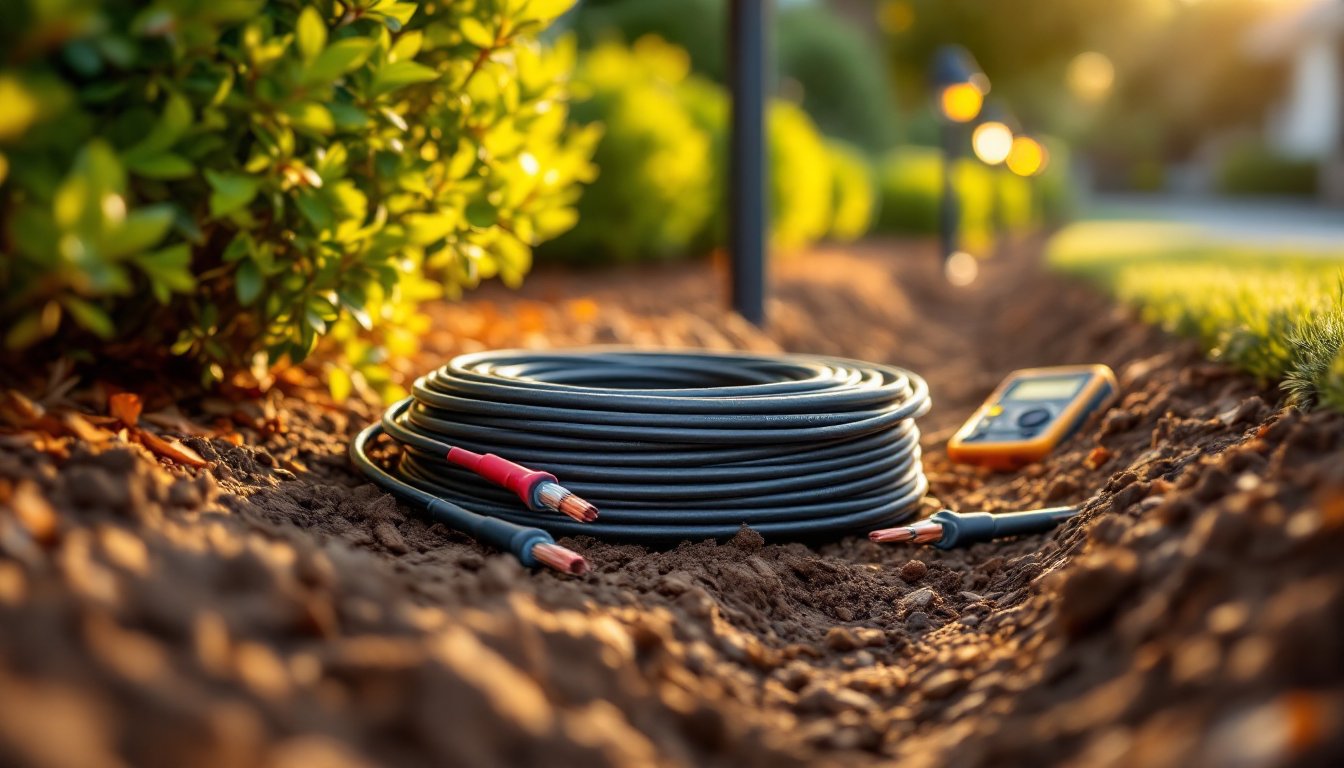
Materials range from powder-coated aluminum to copper and stainless steel. Aluminum resists rust and keeps costs down, while copper develops a patina over time, a look some prefer for traditional landscapes. Low-voltage systems (12V or 24V) are standard for path lighting, requiring a transformer to step down household current. This makes installation safer for DIYers compared to line-voltage (120V) setups.
Consider bollard lights for a cleaner look along driveways or modern landscapes. These cylindrical fixtures stand taller (24 to 42 inches) and often feature frosted lenses or louvered designs to diffuse light evenly. They’re more visible during the day, so placement should complement hardscape lines rather than interrupt them.
Spotlights and Accent Lighting
Spotlights (also called uplights or bullet lights) direct a focused beam onto specific features, tree trunks, architectural details, sculptures, or specimen plants. Unlike path lights that spread illumination horizontally, spotlights create vertical drama by washing light upward or across a surface.
Beam angle determines the effect. Narrow beams (10 to 25 degrees) work for tall, slender targets like columnar evergreens or flagpoles, while wider floods (40 to 60 degrees) suit broad canopies or wall facades. Adjustable fixtures with swivel heads let homeowners tweak the aim as plants grow or seasonal interest shifts.
Mounting options include ground stakes for aiming at trees and shrubs, or surface mounts for attaching to hardscape, walls, or structural beams. Wattage typically ranges from 5 to 20 watts for LED spotlights, with higher output needed for larger trees or features farther from the fixture. Keep in mind that light intensity falls off quickly with distance, a 10-watt LED may look bright up close but won’t punch through heavy foliage 15 feet away.
Color temperature plays a role in how plants and materials appear at night. Warm white (2700K to 3000K) mimics incandescent glow and flatters brick, stone, and warm-toned wood, while cool white (4000K to 5000K) can wash out certain plant colors. Warm tones are generally safer for residential landscapes unless mimicking moonlight is the goal.
For those planning a professional outdoor lighting installation, spotlights often form the backbone of a layered design that combines multiple fixture types.
Deck and Step Lighting
Deck lights and step lights address safety and code compliance while adding subtle visual interest to transitions and elevated surfaces. Building codes in many jurisdictions require illumination on stairs with more than a certain number of risers (often three or more), though specifics vary, check local amendments to the International Residential Code (IRC).
Riser lights mount vertically on the face of each step, casting light downward onto the tread below. Tread lights recess into the horizontal surface, either in the nose of the step or along the sides. Recessed fixtures require cutting pockets during construction or retrofit, so surface-mount options (like low-profile puck lights) offer easier installation on existing stairs.
For decks, post cap lights replace standard wood or composite caps with fixtures that wash light across deck surfaces. They’re available in sizes to fit 4×4 or 6×6 posts and come in solar, low-voltage, or line-voltage versions. Solar models work well for perimeter posts far from power sources, but battery performance degrades in shaded locations or during short winter days.
Rail lights mount under or inside handrails, providing continuous illumination without taking up post tops. Some systems use flexible LED strips concealed in routed channels, while others employ discrete modules spaced along the rail length. Voltage drop can be an issue on long runs, plan for wire gauge (typically 12 or 14 AWG for low-voltage) that matches the total fixture load and run distance to avoid dimming at the far end.
Safety note: Always use fixtures rated for wet or damp locations depending on exposure. Wet-rated units withstand direct rain and snow, while damp-rated fixtures suit covered areas like under-deck soffits.
Well Lights and In-Ground Fixtures
Well lights (also called in-ground or recessed uplights) install flush with grade, creating uplighting effects without visible hardware. They’re ideal for illuminating trees from below, washing light across walls or fences, or highlighting plantings without cluttering sightlines.
Installation requires digging a cavity sized to the fixture housing, typically 6 to 12 inches deep and 4 to 8 inches in diameter. A gravel base aids drainage, standing water is the enemy of in-ground fixtures, even those rated IP67 or IP68 (dust-tight and submersion-resistant). Homeowners in heavy clay or poorly draining soils should consider a French drain or gravel sump beneath each well light to prevent water accumulation.
Housing materials matter. Cast brass or stainless steel bodies resist corrosion better than powder-coated steel, which can fail if the coating chips and moisture reaches bare metal. Tempered glass lenses withstand foot traffic and freeze-thaw cycles better than acrylic, which can yellow or crack over time.
Many outdoor lighting designs incorporate well lights to emphasize mature trees or architectural columns. Aiming is critical: position the fixture several feet from the tree trunk and angle the beam to graze bark texture, rather than pointing straight up into the canopy, which creates a harsh, unnatural effect.
Drivable well lights feature reinforced housings and lenses rated to support vehicle weight, making them suitable for driveways or pathways shared with cars. Standard well lights will crack or collapse under tire loads, so verify the load rating (often expressed in pounds or vehicle class) before installation in trafficked areas.
Floodlights and Security Lighting
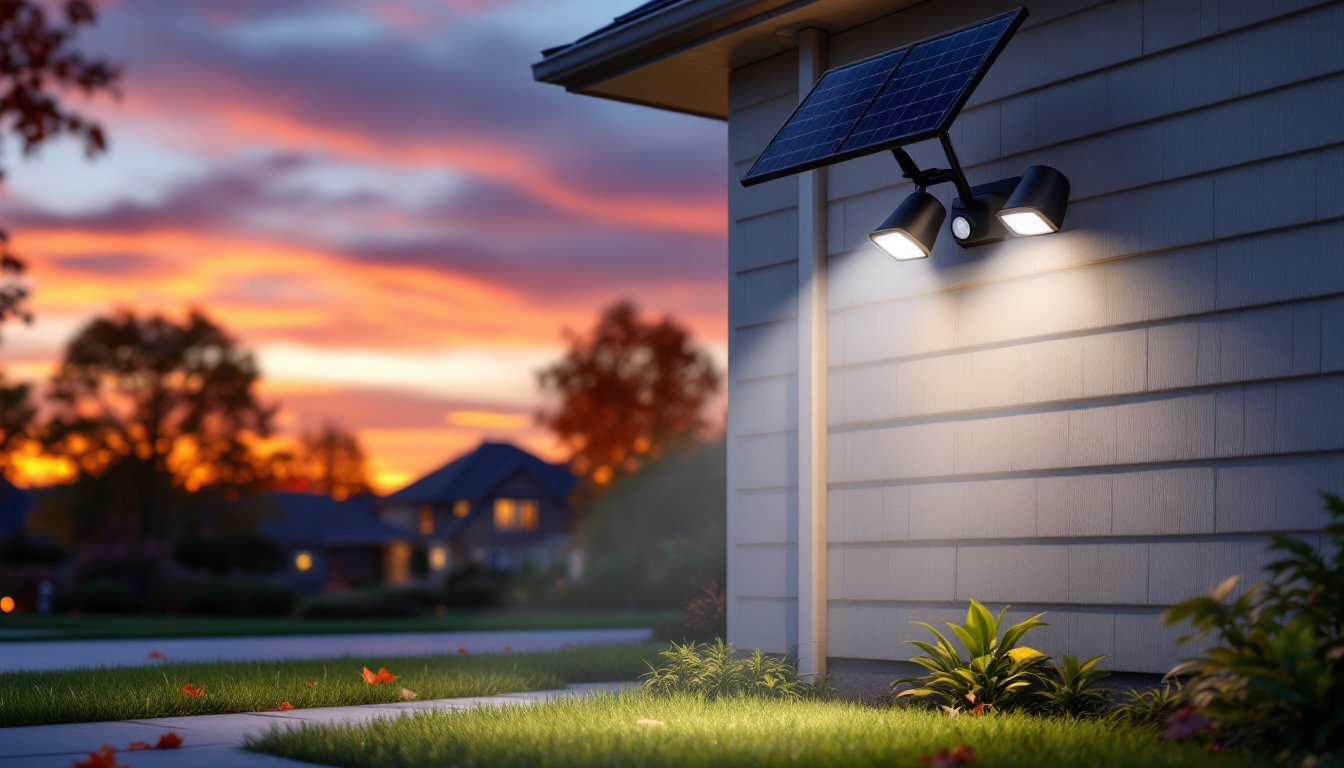
Floodlights deliver broad, high-intensity illumination for large areas like backyards, parking pads, or sports courts. Unlike accent lights that highlight specific features, floods aim to make entire zones visible and functional after dark.
Most residential floodlights use LED arrays ranging from 20 to 100+ watts, with light output measured in lumens. A 30-watt LED flood typically produces around 2,400 to 3,000 lumens, enough to light a modest backyard or driveway. Larger properties or security applications may require 80 to 150 watts (8,000+ lumens), but higher output comes with increased glare risk, shield fixtures or aim them away from neighboring properties to avoid complaints.
Motion sensors turn floodlights into security tools, triggering illumination when movement is detected. Sensor range and sensitivity are adjustable on most units: set the detection zone to cover entry points like gates or side yards without false triggers from passing cars or wildlife. Photocells (dusk-to-dawn sensors) automatically switch lights on at sunset and off at sunrise, eliminating the need for timers or manual control.
Mounting height affects coverage and glare. Floods installed 8 to 12 feet above grade cast light farther and reduce direct eye-level glare compared to lower placements. Eave-mount or pole-mount fixtures are common: ensure the mount is rated for the fixture weight and wind load, especially for larger LED units with substantial heat sinks.
Line-voltage floodlights (120V) require electrical boxes and often need permits for installation, particularly when adding new circuits. If running new wiring feels daunting, low-voltage flood options exist, though they generally max out around 50 watts and cover smaller areas. For comprehensive guidance on sustainable lighting solutions, LED floodlights offer the best lumens-per-watt efficiency and longest service life, reducing both energy bills and bulb replacement hassles.
String Lights and Decorative Fixtures
String lights (bistro lights, cafe lights, festoon lights) have migrated from seasonal decor to permanent outdoor fixtures, adding ambiance to patios, pergolas, and dining areas. They consist of sockets spaced along a cable, typically 12 to 24 inches apart, each holding a bulb, traditionally incandescent Edison-style globes, now increasingly LED.
Bulb type influences the look and longevity. Incandescent bulbs produce warm, flickering light but burn out frequently (500 to 1,000 hours) and draw significant power. LED Edison bulbs mimic the vintage filament appearance while lasting 15,000 to 25,000 hours and using a fraction of the wattage. Shatterproof acrylic bulbs are worth considering for high-traffic areas or homes with active kids and sports equipment flying around.
Installation requires strong anchor points, 4×4 posts, structural beams, or dedicated poles, since the combined weight of cable, sockets, and bulbs adds up quickly. A 25-foot strand with 12 bulbs can weigh 5 to 8 pounds dry, more when ice or snow accumulates. Use screw eyes or cup hooks rated for at least twice the expected load, and tension the cable with a turnbuckle or tensioning kit to prevent sagging.
String lights typically run on 120V and plug into standard outlets, though some manufacturers offer low-voltage DC systems that require a transformer. GFCI protection is non-negotiable for outdoor use, install a GFCI outlet or use a portable GFCI adapter if existing receptacles lack ground-fault protection. According to common residential lighting standards, outdoor electrical work often requires permits, so verify local requirements before hardwiring permanent installations.
Solar string lights eliminate wiring but sacrifice brightness and consistency, they’re best for accent rather than task lighting, and performance suffers in shaded or overcast locations. For areas where ambiance matters more than illumination (like framing a seating area or pergola), solar can work, but don’t expect them to light a dining table well enough for reading a menu.
Conclusion
Choosing the right landscape lighting types comes down to matching fixtures to function. Path lights guide movement, spotlights create focal points, and floodlights ensure visibility and security. Deck and step lights satisfy safety codes while well lights hide hardware, and string lights add warmth without much fuss. Planning a system that layers these elements, rather than relying on a single fixture type, delivers outdoor spaces that work as hard at night as they do during the day.