Installing landscape lighting transforms how a property looks after dark, and it’s one of those projects that delivers outsized impact for the effort involved. Done right, outdoor lighting adds curb appeal, extends usable hours in the yard, and improves safety along walkways and stairs. But slapping up a few solar stakes won’t cut it if the goal is professional-looking results. This guide covers the planning, fixture selection, and installation steps needed to create a landscape lighting system that lasts.
Table of Contents
ToggleKey Takeaways
- Landscape lighting installations boost curb appeal, extend outdoor living hours, and improve safety—with professional systems typically costing $2,000 to $5,000 or DIY options available for under $500.
- Choose the right fixture types (path lights, spotlights, wash lights, deck/step lights, and well lights) based on your property’s functional needs and desired visual effects.
- Always oversize your transformer by at least 20% above total fixture wattage and use heavier-gauge wire (12-gauge) for cable runs longer than 50 feet to avoid voltage drop issues.
- Low-voltage systems are DIY-friendly and don’t require permits in most areas, while line-voltage systems require electrical permits and should be left to licensed electricians.
- Test your entire landscape lighting system before burying cable to catch connection issues early, and perform annual maintenance checks on connections, lenses, and timers to extend system life.
- Avoid common mistakes like undersizing transformers, over-lighting your yard, burying cable too shallow, and using indoor-rated connectors—invest in direct-burial-rated connectors to prevent corrosion.
Why Landscape Lighting Matters for Your Home
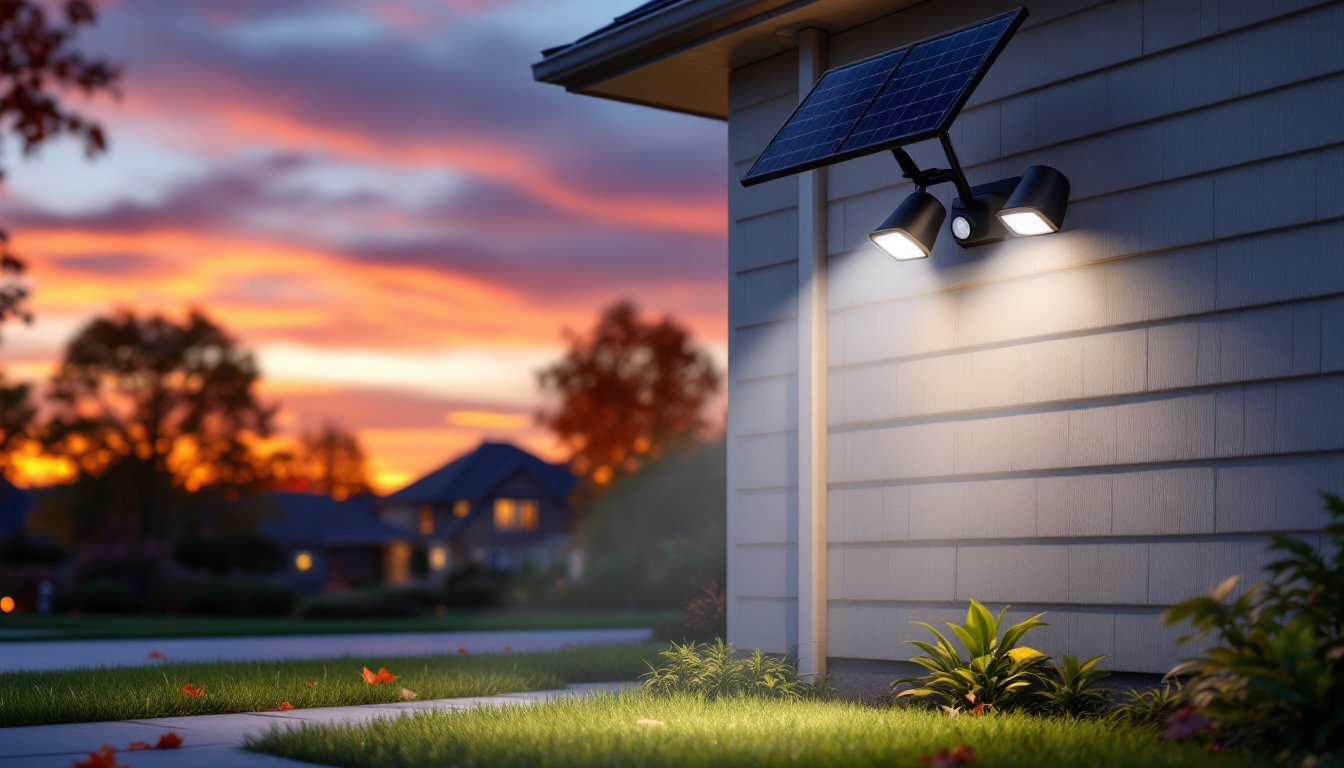
Well-planned outdoor lighting serves three core purposes: safety, security, and aesthetics. Illuminated pathways reduce trip hazards, while motion-activated fixtures near entry points deter intruders. From a design standpoint, uplighting trees or washing light across architectural features adds depth and drama that’s invisible during daylight.
Property value gets a measurable boost, too. Real estate professionals consistently note that homes with quality outdoor lighting systems photograph better and make stronger first impressions during evening showings. The investment typically ranges from $2,000 to $5,000 for a professionally installed system, though DIY projects using low-voltage kits can come in under $500 depending on the number of fixtures.
Beyond dollars and cents, landscape lighting extends the functional life of outdoor spaces. Decks, patios, and garden areas become usable well past sunset, which matters in climates where evenings offer the most comfortable temperatures. Many homeowners find they actually use their yards more once lighting is in place.
Types of Landscape Lighting Fixtures to Consider
Choosing the right fixture type depends on what needs illumination and the desired effect. Here are the workhorses of landscape lighting:
Path lights stand 12–24 inches tall and cast downward pools of light along walkways. They’re available in stake-mount or surface-mount versions. Look for models with shielded bulbs to avoid glare.
Spotlights and uplights direct narrow beams upward to highlight trees, statuary, or building facades. Adjustable heads allow fine-tuning after installation. Wattage matters here, 20–50 watts (incandescent equivalent) handles most residential applications.
Wash lights produce wide, soft illumination across walls or hedges. These fixtures mount low and angle upward at 30–45 degrees. They’re ideal for showing off textured surfaces like stone or stucco.
Deck and step lights recess into horizontal or vertical surfaces to mark elevation changes. Most building codes now require stair lighting in new construction, and retrofitting is straightforward with battery-powered LED options.
Well lights sit flush with the ground, protected by metal grates. They’re tough enough for lawn mowing but require careful placement to avoid becoming tripping hazards. Choosing sustainable LED options reduces long-term energy costs and bulb replacement frequency.
LED fixtures have largely replaced halogen and incandescent models due to their longevity (25,000+ hours) and energy efficiency. They also run cooler, which matters when fixtures sit near plants or mulch.
Planning Your Landscape Lighting Layout
Start by walking the property at dusk with a notepad. Identify areas that feel unsafe or visually dull. Mark paths, stairs, and entryways that need functional lighting, then note focal points like specimen trees, water features, or architectural details.
The layering method works best: combine task lighting (pathways, steps), accent lighting (focal points), and ambient lighting (general illumination). Avoid over-lighting, professional designers often use the “dark sky” principle, keeping light levels low and directed where needed rather than flooding the entire yard.
Sketch a basic site plan showing fixture locations, cable runs, and the transformer position. The transformer converts standard 120-volt household current to 12-volt or 24-volt power for low-voltage systems. Place it within 10 feet of a GFCI-protected outdoor outlet, typically near the garage or along an exterior wall.
Calculate total wattage by adding up all fixture ratings, then choose a transformer rated at least 20% higher than the total load. For example, if fixtures total 200 watts, use a 250-watt minimum transformer. This headroom prevents overheating and allows for future additions. Professional landscape designers often reference creative fixture placement ideas when developing plans.
Measure cable runs carefully. Low-voltage wire comes in 12-, 14-, and 16-gauge sizes. Use heavier gauge (lower number) for longer runs to minimize voltage drop. A 100-foot run should use 12-gauge wire: runs under 50 feet can use 14-gauge.
Essential Tools and Materials for Installation
Low-voltage landscape lighting doesn’t require an electrician’s license in most jurisdictions, but having the right gear makes the job faster and cleaner.
Tools needed:
- Flat-blade shovel or edger for trenching
- Wire strippers (10–18 AWG range)
- Screwdrivers (flathead and Phillips)
- Voltage tester or multimeter
- Drill with masonry bits (if mounting to brick or stone)
- Tape measure
- Cable staples or landscape staples
- Hacksaw (for cutting conduit)
Materials checklist:
- Transformer (sized appropriately for total wattage)
- Low-voltage cable (12- or 14-gauge, direct-burial rated)
- Fixtures (path lights, spots, wash lights as needed)
- Wire connectors (waterproof gel-filled or twist-lock types)
- Conduit (PVC schedule 40 for protecting wire near the transformer)
- Bulbs (if not included with fixtures: LED preferred)
- Mulch or soil to cover trenches
Safety gear:
- Work gloves (leather or synthetic)
- Safety glasses
- Knee pads (trenching is hard on joints)
Skip the cheap wire connectors that come in some kits. Invest in silicone-filled or heat-shrink connectors rated for direct burial. Corrosion at connection points is the leading cause of fixture failure after a few seasons.
Step-by-Step Installation Process
Low-Voltage vs. Line-Voltage Systems
Before digging, understand the difference between low-voltage (12V/24V) and line-voltage (120V) systems. Low-voltage is DIY-friendly, safer to work with, and doesn’t require permits in most areas. It uses a plug-in transformer and can be installed without conduit in many jurisdictions, though burying cable 6–8 inches deep protects it from shovels and mowers.
Line-voltage systems run on standard household current and require electrical permits, GFCI protection, and conduit burial at code-specified depths (usually 18–24 inches). They’re overkill for most residential applications and best left to licensed electricians.
For a typical low-voltage installation:
-
Mount the transformer near a GFCI outlet, at least 12 inches above ground to prevent water intrusion. Use corrosion-resistant screws if attaching to siding or masonry.
-
Lay out the cable along the planned route without cutting it. This confirms measurements and reveals any obstacles. Use a single main cable run with fixtures tapping off it, rather than running separate wires to each light (“daisy-chaining” is more efficient).
-
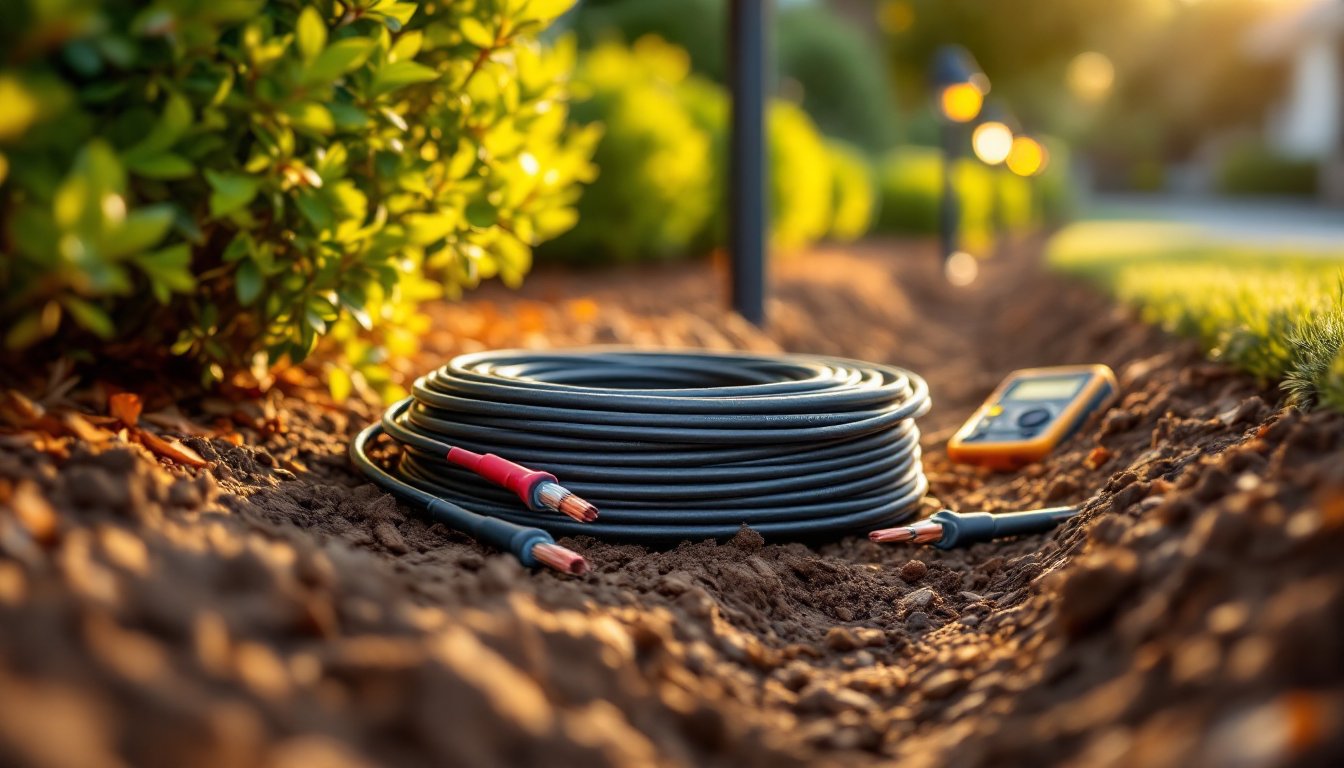
Dig trenches 6–8 inches deep along the cable path. An edger works well for straight runs: a narrow shovel handles curves. Remove sod carefully if the trench crosses lawn, it can be replaced afterward.
-
Position fixtures and stake them loosely. Don’t drive stakes fully until after testing. Many designs incorporate adjustable mounting options that allow fine-tuning of aim and angle.
-
Make connections using waterproof connectors. Most low-voltage fixtures use quick-connect piercing terminals that bite through cable insulation. Ensure connections are tight and seated fully, loose connections create resistance and dim lighting.
-
Test the system before burying cable. Turn on the transformer and check that all fixtures illuminate. Use a multimeter to verify voltage at the farthest fixture, it should read within 10% of the transformer’s output. Significant voltage drop indicates undersized wire or poor connections.
-
Bury the cable and backfill trenches. Tamp soil lightly to avoid settling later. Replace sod or mulch over trenches. Many experts recommend visiting garden design resources for ideas on integrating lighting with plantings.
-
Adjust fixture angles once everything’s live. Spotlights should illuminate the target without spilling onto neighboring properties. Path lights work best when their beams overlap slightly, creating continuous coverage without dark gaps.
-
Set the timer on the transformer. Most models include photocells that turn lights on at dusk, plus timers to shut them off after a set number of hours (4–6 hours is typical to save energy).
Permit note: While low-voltage lighting rarely requires permits, always check local codes. Some jurisdictions have specific rules about fixture placement near property lines or brightness levels.
Common Mistakes to Avoid During Installation
Undersizing the transformer is mistake number one. Homeowners often calculate exact wattage and buy a matching transformer, leaving no room for expansion or safety margin. Always oversize by at least 20%.
Ignoring voltage drop on long cable runs causes fixtures at the end of the line to glow dimly or not at all. Use heavier gauge wire for runs over 50 feet, or split the system into multiple zones powered by separate transformer taps.
Skipping the test phase before burial leads to frustrating troubleshooting later. Always verify function while the system is accessible. Digging up a 100-foot trench to fix one bad connection is miserable work.
Over-lighting defeats the purpose of accent lighting. The goal is subtle enhancement, not stadium illumination. When in doubt, use lower-wattage bulbs. It’s easy to upgrade bulbs later: moving fixtures is harder.
Burying cable too shallow invites accidental damage from aerating, edging, or planting. Six inches minimum depth protects against most garden tools. Mark cable routes on a property sketch for future reference.
Using indoor-rated connectors outdoors guarantees corrosion within a season or two. Only use connectors specifically rated for direct burial or outdoor wet locations. The extra cost is minor compared to callback repairs.
Placing fixtures too close to plants creates maintenance headaches as growth obscures light output. Leave at least 12 inches between fixtures and shrubs. Consider mature plant size, not current size. Understanding different lighting styles and applications helps avoid design missteps.
Forgetting about seasonal adjustments, deciduous trees that look perfect when lit in summer may be bare in winter, changing the entire visual effect. Plan lighting around year-round structure, not just peak growing season.
Finally, neglecting maintenance shortens system life. Once a year, check connections for corrosion, clean fixture lenses, trim encroaching vegetation, and verify that timers and photocells function correctly. Most issues caught early take five minutes to fix: ignored problems compound into expensive failures. Some homeowners apply general residential lighting principles learned from interior projects to their outdoor installations, which can help maintain consistent design quality throughout the property.