A well-lit pool area isn’t just about aesthetics, it’s about keeping swimmers safe after dark and making the space usable well into the evening. Whether someone’s planning a late-night swim or hosting poolside gatherings, proper landscape lighting transforms the area from a daytime-only feature into a nighttime destination. But not all outdoor fixtures are created equal, and the wrong choice can lead to corrosion, electrical hazards, or disappointing results. This guide walks through the types of lighting that work best around water, how to choose fixtures that last, and the installation considerations that keep everything up to code and functioning beautifully.
Table of Contents
ToggleKey Takeaways
- Landscape lighting pool areas transforms a daytime-only feature into a safe, inviting nighttime destination while preventing trip hazards around stairs and pool edges.
- Fixtures near pools must have an IP65 rating minimum (dust-tight and water-jet resistant), with IP67 or IP68 recommended for below-grade installations in saltwater or chlorinated environments.
- LED bulbs are the superior choice for pool lighting, lasting 25,000–50,000 hours versus halogen’s 2,000–4,000 hours while using five times less power.
- Layer fixtures at different heights—path lights for ground navigation, bollards for mid-level definition, and uplights for vertical emphasis—to create visual depth and dynamic interest around the pool.
- GFCI protection is mandatory on all circuits serving pool area lighting, and transformers must be positioned at least 10 feet from the pool edge per NEC guidelines to prevent electrical hazards.
- Low-voltage systems (12V or 24V) are safer and easier to install than line-voltage for residential pools, requiring only PVC conduit buried 6 inches deep instead of the 18 inches needed for line-voltage installations.
Why Pool Area Lighting Matters for Safety and Design
Pool area lighting serves two critical functions: preventing accidents and creating an inviting atmosphere. Without adequate illumination, stairs, pool edges, and changes in elevation become serious trip hazards. The National Electrical Code (NEC) requires specific spacing for outlets near pools, and local building codes often mandate lighting for public pools, but residential pools benefit just as much from thoughtful placement.
From a design standpoint, lighting turns a basic pool into a focal point. Underwater pool lights create a glowing effect, but landscape lighting around the perimeter adds depth and dimension. It highlights landscaping, defines walkways, and establishes zones for seating or dining. The right lighting setup makes the space feel intentional rather than accidentally lit.
Safety-wise, GFCI (ground fault circuit interrupter) protection is non-negotiable for any electrical work near water. Pool lighting circuits must be on GFCI breakers, and all fixtures within 10 feet of the water’s edge need to meet specific waterproof standards. Skipping these precautions invites electrical shock risks and code violations that can complicate insurance claims or future home sales.
Types of Landscape Lighting Best Suited for Pool Areas
Not every landscape light belongs near a pool. The fixtures need to handle moisture, resist corrosion, and deliver the right type of illumination without creating glare on the water’s surface.
Path Lights and Bollards for Walkways
Path lights are low-profile fixtures (typically 12–18 inches tall) that mark walkways and pool decking edges. They provide downward-facing illumination that guides foot traffic without blinding anyone walking by. Look for models with shielded bulbs to prevent glare, bare bulbs create hotspots that are harsh on the eyes and reflect off wet surfaces.
Bollard lights are taller (24–42 inches) and work well along longer pathways or driveways leading to the pool. They cast a wider pool of light and can double as design elements with sleek finishes like brushed aluminum or powder-coated steel. Bollards with frosted lenses diffuse light more evenly than clear glass.
For pool decking, space path lights 8–10 feet apart to maintain consistent coverage without over-lighting. Many outdoor lighting techniques apply here, but pool areas demand extra attention to wet-rated fixtures and non-slip surfaces.
Spotlights and Uplights for Focal Points
Spotlights (also called accent lights) throw a focused beam onto specific features, palm trees, water features, or architectural elements like a pool house or pergola. They typically use LED bulbs in the 3–10 watt range, which is plenty for highlighting without overpowering the scene. Adjustable spotlights let the homeowner fine-tune the angle as plants grow or the layout changes.
Uplights are installed at ground level and aimed upward, creating dramatic shadows and emphasizing vertical elements. They work especially well on textured surfaces like stone walls or mature tree trunks. When positioning uplights, keep them at least 5 feet from the pool edge to avoid light spill directly onto the water, which can cause uncomfortable glare for swimmers.
Both spotlight and uplight fixtures should have IP65 or higher ratings (more on that in the next section). Brass and stainless steel housings hold up better than plastic in chlorinated or saltwater environments. Bronze finishes develop a natural patina over time, which some homeowners prefer for a lived-in look.
Choosing the Right Fixtures: Waterproof Ratings and Durability
The IP (Ingress Protection) rating tells you how well a fixture resists dust and water. Pool area lights need a minimum rating of IP65, which means they’re dust-tight and can handle water jets from any direction (think pool splashing and hose spray). For fixtures installed below grade or in planters that collect water, go for IP67 or IP68, which are submersion-rated.
The first digit in the IP code refers to solid particle protection (6 is dust-tight), and the second digit covers liquid protection (5 is water jets, 7 is temporary submersion up to 1 meter, 8 is continuous submersion). A fixture rated IP44 might work for a covered patio, but it won’t survive poolside exposure.
Material choice matters as much as the IP rating. Saltwater pools are especially corrosive, so stainless steel (316 grade) or marine-grade aluminum are the best bets. Avoid fixtures with exposed copper or untreated brass unless they’re specifically marketed for marine use. Powder-coated finishes add a protective layer, but any chips or scratches expose the underlying metal to moisture and chlorine.
LED vs. halogen: LEDs are the standard now for several reasons. They run cooler, last 25,000–50,000 hours compared to halogen’s 2,000–4,000, and draw far less power. A 5-watt LED produces the same light output as a 35-watt halogen. The upfront cost is higher, but the energy savings and reduced maintenance make LEDs the smarter long-term choice. Look for LEDs with a color temperature between 2700K and 3000K for warm, inviting light that mimics traditional incandescent bulbs.
Some pool areas benefit from creative lighting styles that mix functional and ambient fixtures, though waterproof ratings remain the priority near water.
Planning Your Pool Lighting Layout for Maximum Impact
A good lighting plan layers different fixture types to create depth and balance. Start by identifying task zones (stairs, entry/exit points, pool edges) and accent zones (landscaping, water features, seating areas). Task lighting is non-negotiable for safety: accent lighting is where the design comes in.
Avoid overlighting. More fixtures don’t always mean better results. Too much light washes out the scene and creates harsh shadows. Aim for contrast, illuminate key features and let other areas fall into softer shadow. This creates visual interest and guides the eye around the space.
Layer the light at different heights. Path lights handle ground-level navigation, bollards or post lights create mid-level definition, and uplights or tree-mounted fixtures draw attention upward. This vertical layering makes the space feel larger and more dynamic.
Use asymmetry strategically. Perfectly symmetrical lighting can feel sterile. Instead of placing identical spotlights on both sides of the pool, offset them or vary the beam angles. Highlight one side’s landscaping more prominently and let the other side provide subtle fill light.
Consider sightlines from inside the home. Pool lighting often gets viewed through windows or sliding glass doors, so walk through the house at night during the planning phase. Adjust fixture angles to minimize direct glare into living spaces. Shielded fixtures or those with louvered fronts help control beam direction.
Plan for zones and dimming. Installing separate circuits for path lights, accent lights, and pool lights allows independent control. Adding a dimmer (make sure it’s LED-compatible) gives flexibility for different occasions, full brightness for swimming, lower settings for ambient evening light. Smart controls or timers automate the process, but they’re optional extras.
Many landscape lighting principles apply universally, though pools demand extra care with fixture placement and waterproofing.
Installation Tips and Electrical Safety Considerations
Pool lighting installation isn’t a casual weekend project. It involves trenching, conduit runs, and low-voltage or line-voltage electrical work, all of which must meet NEC standards and local codes. Many jurisdictions require a licensed electrician for anything beyond basic low-voltage fixture swaps, and permits are often mandatory.
Low-voltage vs. line-voltage systems: Low-voltage systems (12V or 24V) run through a transformer that steps down standard 120V household current. They’re safer to work with, easier to install, and meet code requirements for most residential applications. Line-voltage systems (120V) deliver more power and work better for larger properties or commercial setups, but they require metal conduit and stricter installation protocols. For DIYers, low-voltage is the way to go.
Transformer placement matters. The transformer should be at least 10 feet from the pool edge per NEC guidelines (check local codes, some areas require 15 feet). Mount it in a weather-protected location, like under an eave or inside a weatherproof enclosure. Size the transformer to handle at least 20% more wattage than the total fixture load to avoid overloading and allow for future additions.
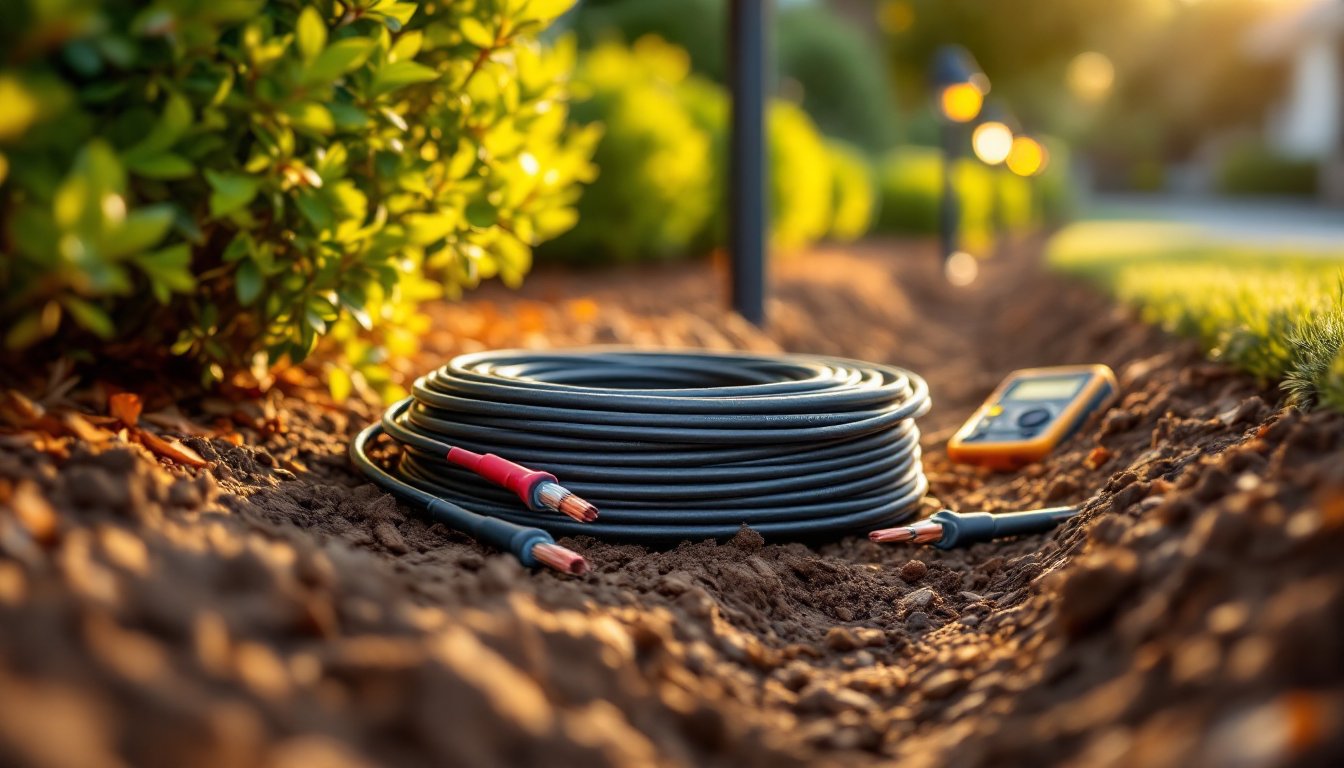
Conduit and wire burial depth: Even low-voltage wiring should run through PVC conduit to protect it from lawn equipment and moisture. Bury conduit at least 6 inches deep for low-voltage (18 inches for line-voltage in rigid metal conduit). Use sweep elbows instead of 90-degree fittings to make future wire pulls easier. Experts at home improvement sites often recommend labeling conduit runs with buried marking tape a few inches above the conduit to prevent accidental digging.
GFCI protection is mandatory. Every circuit serving pool area lighting must have GFCI protection, either at the breaker panel or via a GFCI receptacle. Test the GFCI monthly by pressing the test button, if it doesn’t trip, replace it immediately.
Fixture installation best practices:
- Seal all connections. Use silicone-filled wire nuts or heat-shrink connectors for splices. Standard wire nuts aren’t waterproof.
- Slope conduit slightly away from fixtures to prevent water from pooling inside.
- Stake fixtures firmly but don’t overtighten, cracked housings void waterproof ratings.
- Aim fixtures before backfilling. It’s much easier to adjust angles with the trench open.
Safety gear: Wear work gloves, safety glasses, and knee pads for trenching and installation. If drilling into concrete or pavers for fixture mounts, use a dust mask or respirator, silica dust from masonry is a serious respiratory hazard.
Wet testing: Before burying conduit or finalizing the install, turn everything on and spray fixtures with a hose to check for leaks or shorts. Better to catch a faulty seal during installation than after landscaping is complete.
Professional help: If the project involves connecting to the main electrical panel, working within the pool’s electrical safety zone (within 5 feet of the water), or upgrading service capacity, hire a licensed electrician. Permits and inspections aren’t just bureaucratic hoops, they ensure the work is safe and won’t create liability issues down the road. Some areas also require bonding of metal fixtures and conduit to the pool’s equipotential bonding grid, which is definitely electrician territory.