Low ceilings shouldn’t mean settling for dim, cramped dining spaces. With the right fixtures and layout strategies, even an 8-foot ceiling can feel open, well-lit, and inviting. The challenge isn’t height, it’s choosing lighting that maximizes brightness without eating up headroom or creating glare. This guide walks through fixture types, placement techniques, and visual tricks that make low-ceiling dining rooms feel taller and brighter. Whether renovating or just swapping out a dated chandelier, these solutions deliver light where it’s needed without bumping anyone’s head.
Table of Contents
ToggleKey Takeaways
- Dining room lighting ideas for low ceilings should prioritize fixtures that spread light efficiently, such as flush mounts, semi-flush mounts, and recessed layouts that preserve headroom while delivering adequate brightness.
- Maintain at least 30 to 36 inches of clearance between the bottom of a light fixture and the tabletop to ensure safety and comfort in spaces with limited vertical space.
- Choose fixture styles and sizes proportional to your table—round fixtures suit round or square tables, while rectangular designs work best for long tables, following the guideline that the fixture width should be one-half to two-thirds the table width.
- Layer multiple light sources, including ambient recessed lighting and accent options like wall sconces or LED strips, to create even brightness and avoid the flat, monotonous appearance of a single central fixture.
- Use uplighting, light-colored shades, and mirrors strategically to create the visual illusion of height and make low-ceiling dining rooms feel more open and spacious.
- Select warm white color temperatures (2700K to 3000K) and dimmable LEDs for dining applications to enhance food and skin tones while providing flexibility for different occasions and moods.
Why Low Ceilings Need Special Lighting Considerations
Standard ceiling heights in residential dining rooms typically range from 8 to 9 feet. Anything under 8 feet qualifies as low by most building codes, though many older homes and basements sit closer to 7 or 7.5 feet. These compressed spaces create three core challenges for lighting.
First, vertical clearance matters. Hanging a traditional chandelier with a 24-inch drop leaves just 5 to 6 feet of clearance above the table, tight for anyone standing or moving chairs. The general rule: maintain at least 30 to 36 inches between the bottom of a fixture and the tabletop, which doesn’t leave room for fixtures that extend 12 inches or more from the ceiling.
Second, low ceilings trap heat and concentrate glare. Fixtures with exposed bulbs or downward-only light create harsh shadows and bright spots on the table while leaving walls and corners dark. This imbalance makes rooms feel smaller.
Third, proportions get tricky. A fixture that looks elegant in a showroom with 10-foot ceilings can overwhelm a low-ceiling space. Scale matters as much as clearance, both in diameter and visual weight. Choosing the right style means balancing function, safety, and the illusion of height.
Flush Mount and Semi-Flush Mount Fixtures
Flush mounts sit directly against the ceiling with no gap, extending downward 4 to 8 inches. Semi-flush mounts drop 6 to 12 inches on a short stem or chain, creating a small gap between the fixture and ceiling. Both preserve headroom while providing adequate light spread.
Flush mounts work best in rooms with ceilings at or below 7.5 feet. Look for fixtures with diffusers, frosted glass, fabric shades, or perforated metal, that scatter light upward and outward instead of just down. A bare-bulb flush mount might save space but creates glare and shadows. Multi-bulb designs with three to five sockets rated for 60-watt equivalent LEDs deliver enough lumens (around 2,400 to 4,000 total) to light a 10×12-foot dining area without a supplemental source.
Semi-flush mounts suit 8-foot ceilings where a bit of visual interest helps. The slight drop adds dimension without sacrificing clearance. Choose designs with drum shades or bowl-style diffusers that direct some light toward the ceiling, this bounce effect brightens the room and makes ceilings feel higher. Avoid fixtures with downward-facing spotlights or narrow beam angles: they’ll create hot spots on the table.
Installation is straightforward if there’s already a ceiling box. Most flush and semi-flush mounts weigh under 15 pounds and mount with a crossbar and wire nuts. Always kill power at the breaker before working on electrical. If the existing box is old or loose, replace it with a pancake box or remodel box rated for fixture weight.
Choosing the Right Style for Your Dining Room
Style should match the room’s architecture and the table’s shape. For modern farmhouse styles, look for drum shades with metal or wood accents, finishes like brushed nickel, matte black, or oil-rubbed bronze pair well with wood tables. Geometric or industrial cage designs work in contemporary spaces, especially over rectangular tables.
Round fixtures suit round or square tables: rectangular or linear designs better match long tables. Diameter guidelines: the fixture should be one-half to two-thirds the width of the table. For a 42-inch round table, a 21- to 28-inch fixture feels proportional.
Color temperature affects mood. 2700K to 3000K (warm white) mimics incandescent light and feels inviting for dining. Avoid cool whites above 4000K, they wash out food and skin tones. Dimmable LEDs offer flexibility for different occasions.
Recessed Lighting Layouts That Maximize Brightness
Recessed cans, also called downlights or can lights, sit flush with the ceiling plane, making them ideal for low ceilings. Standard housing depths range from 4 to 6 inches for new construction cans, though remodel or retrofit housings work in existing ceilings without tearing out drywall.
For dining rooms, a symmetrical layout works best. A common approach: four to six 4-inch or 6-inch cans arranged in a square or rectangle around the table perimeter, spaced 3 to 4 feet apart. This creates even, shadow-free light without a single bright center point. If the table is off-center in the room, orient the layout to the table, not the room, light should serve function first.
Trim and bulb choice matter as much as placement. Adjustable or gimbal trims let you angle light toward the table or walls. Avoid narrow flood beams (less than 40 degrees): they create circles of light with dark gaps. Use wide flood or general-purpose trims with 60- to 80-degree beam spreads. LED retrofit kits with integrated drivers simplify installation and offer consistent color temperature.
One caution: recessed lighting alone can feel flat. Layer in a decorative flush mount over the table for visual interest, or add wall sconces for depth. According to interior design experts, successful lighting design uses at least two source types, ambient and accent, to avoid monotony.
Dimming recessed lights requires compatible LED bulbs and a TRIAC or ELV dimmer switch. Not all LEDs dim smoothly: check the bulb spec sheet for dimmer compatibility. Installing a dimmer adds control for everything from bright task lighting during assignments to soft ambiance during dinner.
Wall Sconces and Accent Lighting Solutions
Wall sconces free up ceiling real estate while adding light at eye level, critical for making low-ceiling rooms feel open. Mount sconces 60 to 66 inches from the floor (center of the fixture), roughly 5 to 6 feet apart if using multiple units along one wall. This height keeps them above seated diners’ sightlines but low enough to provide usable light.
In dining rooms, sconces work best on walls perpendicular to the table, not directly behind seating where they’ll shine in diners’ eyes. Uplight or multi-directional sconces bounce light off the ceiling and walls, increasing overall brightness without glare. Downlight-only sconces create moody accent light but don’t contribute much ambient illumination.
Hardwiring sconces requires running cable through the wall, doable in drywall but trickier in plaster or if there’s no accessible attic or basement for fishing wire. Plug-in sconces with cord covers offer an alternative if running new electrical isn’t feasible. They won’t look as clean, but cord covers painted to match the wall minimize visibility.
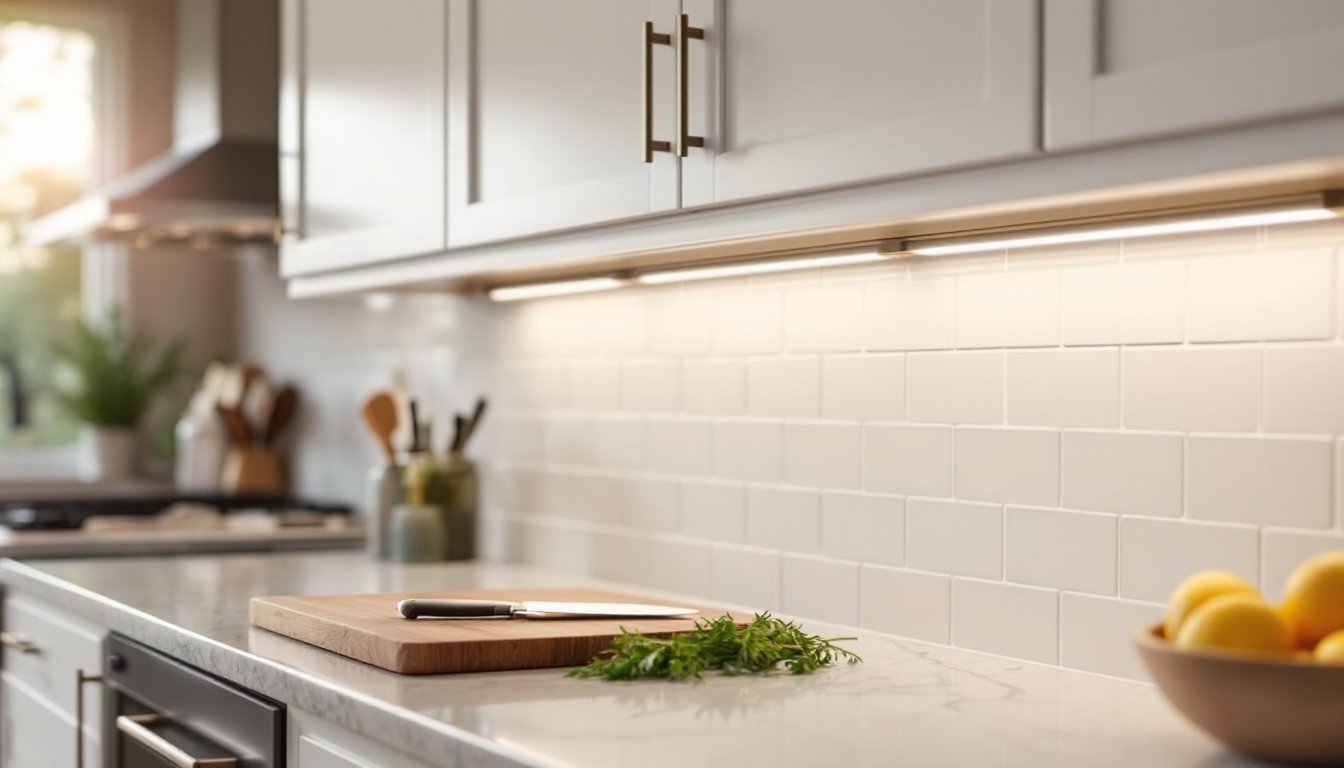
For accent lighting, consider LED strip lights or tape lights along the top edge of wainscoting, crown molding, or built-in shelving. These low-profile sources add ambient glow without taking up space. Stick with warm white (2700K to 3000K) and choose strips rated for at least 300 lumens per foot to make a visible impact. They’re low-voltage (12V or 24V), requiring a transformer, but installation is straightforward with adhesive backing and wire clips.
Another option: picture lights or art lights above artwork or a sideboard. They add layered light and draw the eye upward, which helps counter the low ceiling’s visual weight. The key is spreading light sources around the room rather than relying on one central fixture.
Creating Visual Height with Light and Color
Lighting tricks can’t raise physical ceilings, but they can manipulate perception. The goal: make the eye travel upward and outward instead of focusing on the ceiling’s proximity.
First, paint ceilings lighter than walls. White or off-white reflects more light, making the ceiling recede visually. Semi-gloss or satin finishes reflect even more than flat paint, though they’ll show imperfections. If the ceiling has texture or patches, stick with flat.
Second, use uplighting to wash the ceiling with indirect light. Torchiere-style floor lamps, wall sconces with uplight components, or even LED strips hidden atop tall furniture send light upward. This softens shadows and reduces the ceiling’s visual dominance. Placement near corners or along perimeter walls spreads the effect.
Third, avoid dark or heavy ceiling fixtures that draw attention downward. A black drum shade or wrought-iron chandelier can feel oppressive in a low-ceiling room. Light-colored shades, glass diffusers, or open metalwork keep fixtures visually airy. The goal is to minimize the fixture’s visual mass.
Fourth, coordinate light levels across the room. Dark corners make spaces feel smaller. Adding recessed lighting layouts that extend to room edges ensures even brightness. According to home design resources, well-distributed light makes any room feel larger.
Finally, use mirrors or reflective surfaces strategically. A mirror on a wall opposite a window or sconce multiplies light and creates the illusion of depth. Glossy tabletops, metallic decor, or glass-front cabinets also bounce light around the room. It’s not about adding more fixtures, it’s about making the most of the light already there.
Conclusion
Low ceilings don’t require accepting dim, cramped dining spaces. Flush mounts, recessed layouts, and strategic accent lighting deliver brightness and style without sacrificing headroom. The key is choosing fixtures that spread light efficiently, coordinating placement to avoid glare, and using color and reflection to create the illusion of height. Whether working with existing recessed lighting or installing new flush mounts, these strategies make any low-ceiling dining room feel open, inviting, and well-lit.