Walk into most new homes today and you’ll spot those sleek, flush-mounted ceiling lights that seem to disappear into the architecture. LED recessed lighting has become the go-to choice for homeowners who want clean, modern illumination without bulky fixtures hanging from the ceiling. They’re energy-efficient, long-lasting, and versatile enough to work in nearly every room. Whether retrofitting an older home or planning a new build, understanding how these lights work and where to place them makes the difference between a well-lit space and one that feels flat or glaringly overlit. This guide covers everything needed to choose, plan, and install LED recessed lights the right way.
Table of Contents
ToggleKey Takeaways
- LED recessed lighting consumes 75% less energy than incandescent bulbs and lasts 15-25 times longer, delivering up to 50,000 hours of use (roughly 20+ years).
- Plan fixture spacing based on ceiling height: use the rule of dividing ceiling height by two to prevent dark spots and avoid over-lighting your space.
- Choose between IC-rated housings for new construction, retrofit housings for existing ceilings, and integrated LED or LED-ready fixtures based on your installation scenario.
- Position recessed lights strategically by room—install kitchen fixtures 18-24 inches from cabinets for task lighting, position bathroom lights flanking mirrors, and use living room fixtures around the perimeter to wash walls with light.
- Match LED-compatible dimmers to dimmable LED recessed lights to prevent flickering and ensure proper brightness control, and always verify power is off before installation.
- Use IC-rated housings to prevent fire hazards and warranty voids when insulation contacts the fixture, and test every light before closing up the ceiling.
What Is LED Recessed Lighting and Why Choose It?
LED recessed lighting (often called can lights or downlights) consists of light fixtures installed into openings in the ceiling, so the housing sits above the drywall and only the trim and bulb are visible below. Unlike traditional incandescent or halogen recessed lights, LED lights for recessed lighting use light-emitting diodes that consume far less energy and produce minimal heat.
The benefits are hard to ignore. LEDs use about 75% less energy than incandescent bulbs and last 15-25 times longer, often delivering 25,000-50,000 hours of use. That translates to roughly 20+ years under typical household conditions. They also produce less heat, reducing the risk of insulation contact issues and lowering cooling costs in summer.
From a design standpoint, LED lights recessed lighting offers clean lines and flexibility. They won’t clash with furniture or architecture, making them ideal for minimalist or contemporary interiors. Dimmable models allow for mood adjustment, while adjustable trims let homeowners direct light exactly where it’s needed. For anyone planning a lighting upgrade, LEDs represent both an immediate improvement in light quality and a long-term return on investment through reduced energy bills and nearly eliminated bulb replacement costs.
Types of LED Recessed Lights for Your Home
Not all recessed lights are created equal. Choosing the right type depends on the room, ceiling construction, and whether it’s new construction or a retrofit.
New Construction (IC-Rated) Housing
These fixtures install during the framing stage, before drywall goes up. IC-rated housings are approved for direct contact with insulation, critical for energy efficiency and fire safety. They mount directly to joists and include integrated junction boxes. Use these when building new or opening up a ceiling.
Remodel or Retrofit Housings
Designed for existing ceilings, remodel housings use spring-loaded clips that grip the drywall from above. They’re the DIY-friendly choice for upgrades because they don’t require access to the joist cavity. Many retrofit kits include an integrated LED module and trim in one piece, simplifying installation.
Integrated LED vs. LED-Ready
Integrated LED fixtures have the LED module permanently built into the housing, while LED-ready housings accept screw-in LED bulbs. Integrated models tend to be slimmer and offer better thermal management, but when the LED eventually fails, the entire unit may need replacing. LED-ready units let homeowners swap bulbs easily, though integrated models now come with warranties lasting 5-10 years.
Trim Styles
Trims affect both look and function. Baffle trims reduce glare, reflector trims maximize brightness, and adjustable (eyeball) trims direct light to artwork or architectural features. Choosing the right trim matters as much as the housing itself.
Where to Install LED Recessed Lighting for Maximum Impact
Placement drives performance. Stick recessed lights in random spots and the room will look poorly lit even though the wattage. Strategic placement transforms how a space feels and functions.
Kitchens
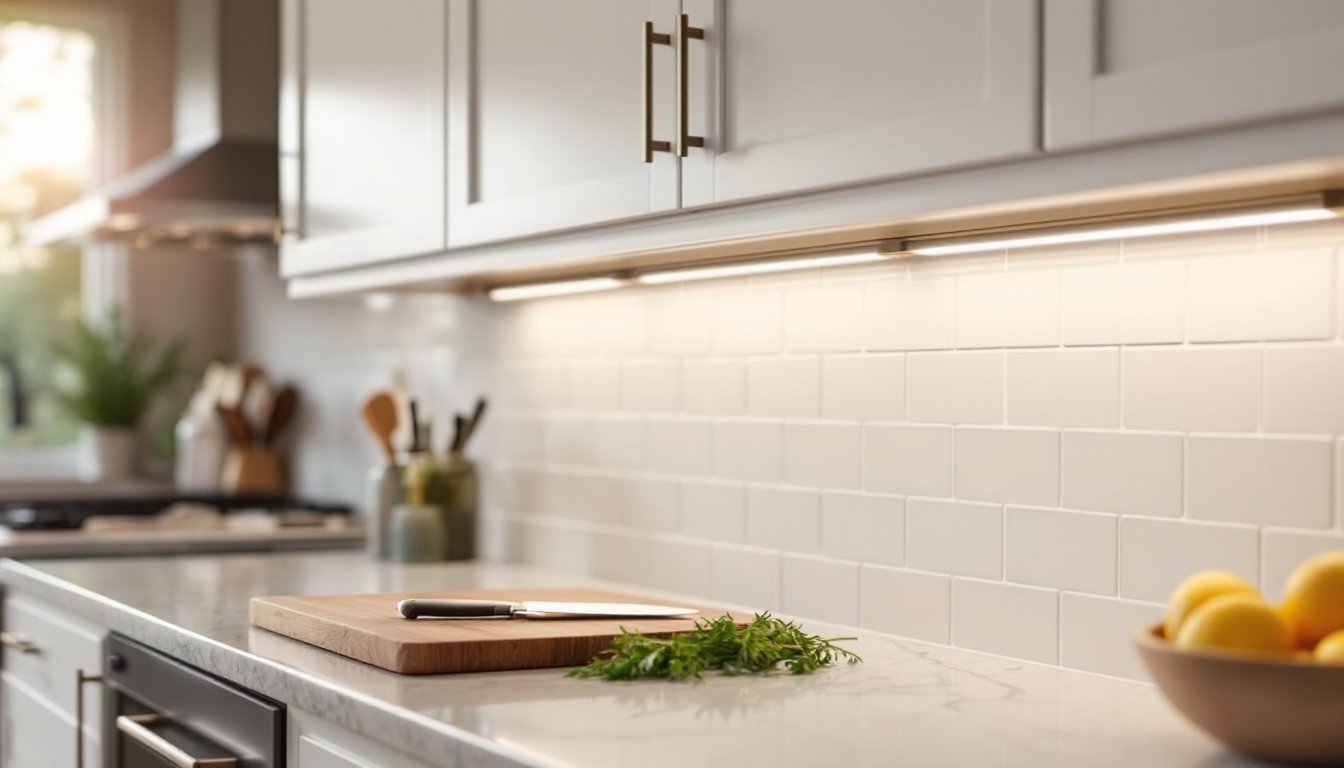
Task lighting matters most here. Install lights 18-24 inches out from cabinets to illuminate countertops without casting shadows from the person working below. Space fixtures 4-6 feet apart for even coverage. Avoid placing lights directly over the center of the room unless there’s an island that needs dedicated task lighting.
Living Rooms
The goal is ambient lighting that complements lamps and other fixtures. For effective living room lighting layouts, install lights around the perimeter, roughly 3-4 feet from walls to wash vertical surfaces with light and make the room feel larger. Use adjustable trims to highlight artwork or architectural details.
Bathrooms
Position lights above showers (use wet-location-rated housings), beside mirrors for task lighting, and over the toilet area. Avoid placing a single light directly above a vanity mirror: it creates harsh shadows. Flank the mirror with sconces or use multiple recessed lights spaced evenly.
Hallways and Entryways
Center fixtures in the hallway width and space them 6-8 feet apart. In entry foyers, consider a central cluster or grid pattern to establish a welcoming first impression.
Bedrooms
Use recessed lights sparingly. They work well over reading chairs or closets but shouldn’t be the primary light source in a bedroom. Install dimmers to create a relaxed atmosphere.
How to Plan Your LED Recessed Lighting Layout
Good lighting design starts with a plan, not a drill. Measure the room, consider ceiling height, and calculate spacing before cutting any holes.
Ceiling Height and Spacing
For standard 8-foot ceilings, space lights 4-5 feet apart. For 9-foot ceilings, increase to 5 feet: for 10-foot ceilings, 5.5-6 feet. The general rule: divide ceiling height by two to get maximum spacing in feet. This prevents dark spots and over-lighting.
Distance from Walls
Place the first row of lights about half the distance between fixtures from the wall. If spacing fixtures 5 feet apart, position them 2.5 feet from the wall. This creates even light distribution and avoids a “spotlight” effect in the center of the room.
Number of Fixtures
A rule of thumb: multiply room square footage by 1.5 to estimate total wattage needed, then divide by the wattage per fixture. For example, a 150-square-foot kitchen needs roughly 225 watts of lighting. If using 15-watt LED recessed lights, that’s about 15 fixtures. Adjust based on natural light, wall colors (darker walls absorb more light), and intended use.
Code and Clearance Considerations
Electrical work must comply with the National Electrical Code (NEC) and local amendments. Most jurisdictions require permits for new circuits or significant rewiring. Check for joist direction before planning fixture locations: running wire perpendicular to joists requires drilling through framing, which may not always be feasible in retrofit scenarios. Maintain at least ½ inch clearance between recessed housings unless they’re IC-rated.
Create a Ceiling Plan
Sketch the room to scale, mark furniture placement, and overlay the fixture grid. This prevents placing a light directly above where a bed or sofa will sit, which creates glare. Refine the layout by considering where to place recessed lights for balanced illumination.
Installing LED Recessed Lights: DIY vs. Professional Help
Retrofitting recessed lights into an existing ceiling is a manageable DIY project for homeowners comfortable with basic electrical work. Installing new construction housings or running new circuits is more involved and often requires a licensed electrician.
DIY-Friendly Scenarios
- Replacing existing recessed fixtures with LED retrofit kits
- Installing remodel housings when there’s attic access above
- Connecting new fixtures to an existing circuit with available capacity
When to Hire a Pro
- Running new circuits from the electrical panel
- Working in ceilings without attic access (cathedral ceilings, multi-story homes)
- Installing in wet locations (showers, covered outdoor soffits)
- Any work requiring a permit (most jurisdictions require permits for new circuits)
Basic DIY Installation Steps
- Turn off power at the breaker and verify with a non-contact voltage tester.
- Mark locations using your lighting plan. Use a stud finder to avoid joists and mark the ceiling.
- Cut holes with a hole saw sized to the housing (most are 4-inch, 5-inch, or 6-inch diameter).
- Run wire from the switch or existing junction box to each fixture location. Use 14/2 NM cable for 15-amp circuits or 12/2 for 20-amp circuits.
- Connect fixtures following manufacturer wiring diagrams (typically black to black, white to white, ground to ground).
- Secure housings with spring clips (remodel) or mounting brackets (new construction).
- Install trim and bulbs (if not integrated), restore power, and test.
Tools Needed
- Non-contact voltage tester
- Hole saw and drill
- Wire strippers and needle-nose pliers
- Screwdrivers (flat and Phillips)
- Fish tape or wire-pulling rods (for retrofit)
- Stud finder
Safety Gear
Always wear safety glasses when drilling overhead and use a dust mask if working in older ceilings with insulation or debris. Fiberglass insulation requires long sleeves and gloves.
For detailed step-by-step guidance, many professional resources outline how to install recessed lights with photos and troubleshooting tips. If the project involves opening walls, adding circuits, or complex wiring, consulting a licensed electrician ensures code compliance and safety.
Common Mistakes to Avoid with LED Recessed Lighting
Even experienced DIYers make lighting mistakes that compromise both aesthetics and function. Avoid these pitfalls to get professional results.
Overlighting the Space
More isn’t always better. Too many fixtures create a commercial, sterile feel. Stick to the spacing guidelines and use dimmers to fine-tune brightness.
Ignoring Insulation Contact
Non-IC-rated fixtures that contact insulation pose a fire hazard and void most warranties. Always use IC-rated housings in insulated ceilings. If retrofitting and unsure of insulation contact, choose IC-rated retrofit kits.
Skipping the Dimmer
Not all LEDs are dimmable, and not all dimmers work with LEDs. Match LED-compatible dimmers to dimmable bulbs or integrated fixtures. Incompatible combinations cause flickering, buzzing, or failure to dim below 30%.
Placing Lights Too Close to Walls
Fixtures installed within a foot of the wall create hot spots and shadows. Follow the half-spacing rule to avoid this.
Mixing Color Temperatures
LED color temperature is measured in Kelvin. 2700K-3000K is warm white (similar to incandescent), 3500K-4100K is neutral, and 5000K+ is cool/daylight. Mixing temps in the same room looks disjointed. Stick to one temperature per space.
Forgetting About Joist Direction
Failing to check joist layout before planning fixture locations often results in re-cutting holes or abandoning planned positions. Use a stud finder or knock test to locate joists, then lay out fixtures between them.
Not Testing Before Closing Up
Always restore power and test every fixture before installing trim or patching drywall. Troubleshooting after the ceiling is finished is frustrating and time-consuming.
Understanding the fundamentals of recessed lighting design helps avoid common errors and results in a polished, professional-looking installation.
Conclusion
LED recessed lighting delivers clean, efficient illumination that works in nearly every room of the home. With proper planning, accurate spacing, appropriate fixture types, and thoughtful placement, homeowners can achieve professional results without hiring an electrician for straightforward retrofits. Focus on layout first, choose quality IC-rated housings, and don’t skimp on dimmers. The result is a modern lighting solution that enhances both function and aesthetics for decades to come.