Low profile recessed lighting solves a common problem: what do you do when your ceiling’s too shallow for standard can lights? Whether you’re dealing with an older home with limited joist depth, a dropped ceiling, or a remodel where every inch matters, low profile fixtures deliver the clean, integrated look of recessed lighting without requiring 6–8 inches of clearance. These fixtures typically need just 2–4 inches of space above the ceiling plane, making them ideal for tight installations where traditional housing won’t fit. They’re not a compromise, they’re a purpose-built solution that’s become a go-to for renovators and new builds alike.
Table of Contents
ToggleKey Takeaways
- Low profile recessed lighting solves shallow ceiling challenges by fitting in just 2–4 inches of space, making it ideal for older homes, basements, and remodels where standard 6–8 inch cans won’t fit.
- These fixtures use integrated LED technology with 25,000–50,000 hour lifespans (15–30 years), drawing only 8–15 watts while delivering 650–1,000 lumens per fixture at roughly $1.50 annually in electricity costs.
- Wafer lights offer the slimmest profile (under 1 inch) for extreme clearance constraints, while slim canless downlights provide better lumen output and dimming compatibility for whole-home installations.
- Proper spacing follows a simple rule: install fixtures at a distance equal to half your ceiling height; for an 8-foot ceiling, space them about 4 feet apart.
- Always verify IC-rated status for insulation contact, confirm dimmer compatibility with LED-rated switches, and obtain permits for new electrical circuits to avoid code violations and future home-sale complications.
- Choose 2700K color temperature for bedrooms and living areas, 3000K for kitchens and baths, and prioritize CRI 90 or higher in spaces where color accuracy matters.
What Is Low Profile Recessed Lighting?
Low profile recessed lighting refers to fixtures designed to fit in ceiling cavities with minimal clearance, typically 2 to 4 inches above the drywall. Traditional recessed cans require 6 to 8 inches of space and a separate housing unit. Low profile models eliminate the bulky housing, integrating the LED module, driver, and trim into a single compact assembly.
Most low profile fixtures use integrated LED technology, meaning the light source isn’t replaceable like an old-school bulb. The entire unit has a rated lifespan of 25,000 to 50,000 hours, roughly 15 to 30 years under typical residential use. When the LEDs eventually dim, you replace the whole fixture, but that’s a rare event in most homeowner timelines.
These fixtures mount directly to the ceiling joists or drywall with clips or junction box adapters. They’re IC-rated (insulation contact) in many cases, meaning they can safely touch loose-fill or batt insulation without overheating. Always verify the IC rating on your specific model if insulation is present.
Why Choose Low Profile Recessed Lights for Your Home
Shallow ceiling cavities are the primary driver. Homes with 2×6 ceiling joists, dropped ceilings, or concrete substrates often can’t accommodate standard 6-inch cans. Low profile fixtures fit where others won’t.
Easier retrofit installations make them popular for remodels. You don’t need to fish wiring through deep cavities or wrestle with separate housings and trim rings. Many low profile kits include quick-connect harnesses that plug directly into a junction box.
Energy efficiency is built-in. Integrated LEDs draw 8 to 15 watts per fixture while delivering 650 to 1,000 lumens, equivalent to a 65–75-watt incandescent. At roughly $0.12 per kWh, you’re looking at about $1.50 per fixture annually in electricity costs if run four hours a day.
Aesthetic flexibility matters, too. Low profile trims sit nearly flush with the ceiling, creating a streamlined look without the recessed “cave” effect of deeper cans. They work especially well in modern or minimalist interiors where every detail counts.
One downside: limited upgrade paths. When the LEDs fail or you want a different color temperature, you replace the entire fixture. Traditional housings let you swap bulbs, but with 20+ year lifespans, most homeowners won’t find that a dealbreaker.
Types of Low Profile Recessed Lighting Fixtures
Wafer lights are the slimmest option, often under 1 inch thick. They mount directly to the ceiling drywall with spring clips, no separate housing required. Most wafer lights include a junction box connector and can be installed in new construction or retrofit scenarios. They’re perfect for basement ceilings, soffits, or anywhere clearance is under 3 inches.
Slim canless downlights offer slightly more depth (2–3 inches) but include integrated drivers and better thermal management. These often feature higher lumen output and dimming compatibility. Many contractors prefer canless models for whole-home installations because they’re faster to wire and less prone to installation errors.
Gimbal and adjustable trims are available in low profile formats. These let you angle the beam up to 30–40 degrees, useful for highlighting artwork or architectural features. They add about half an inch to the overall depth but maintain the low profile advantage.
Color-selectable models include a switch on the fixture or remote that lets you toggle between 2700K (warm white), 3000K (soft white), and 4000K (neutral white). This flexibility is handy if you’re unsure about color temperature during installation or want different moods in multi-use spaces.
All types come in common diameters: 4-inch, 5-inch, and 6-inch. Smaller diameters work well for task lighting and tight spacing: 6-inch models provide broader ambient coverage.
Where to Install Low Profile Recessed Lighting
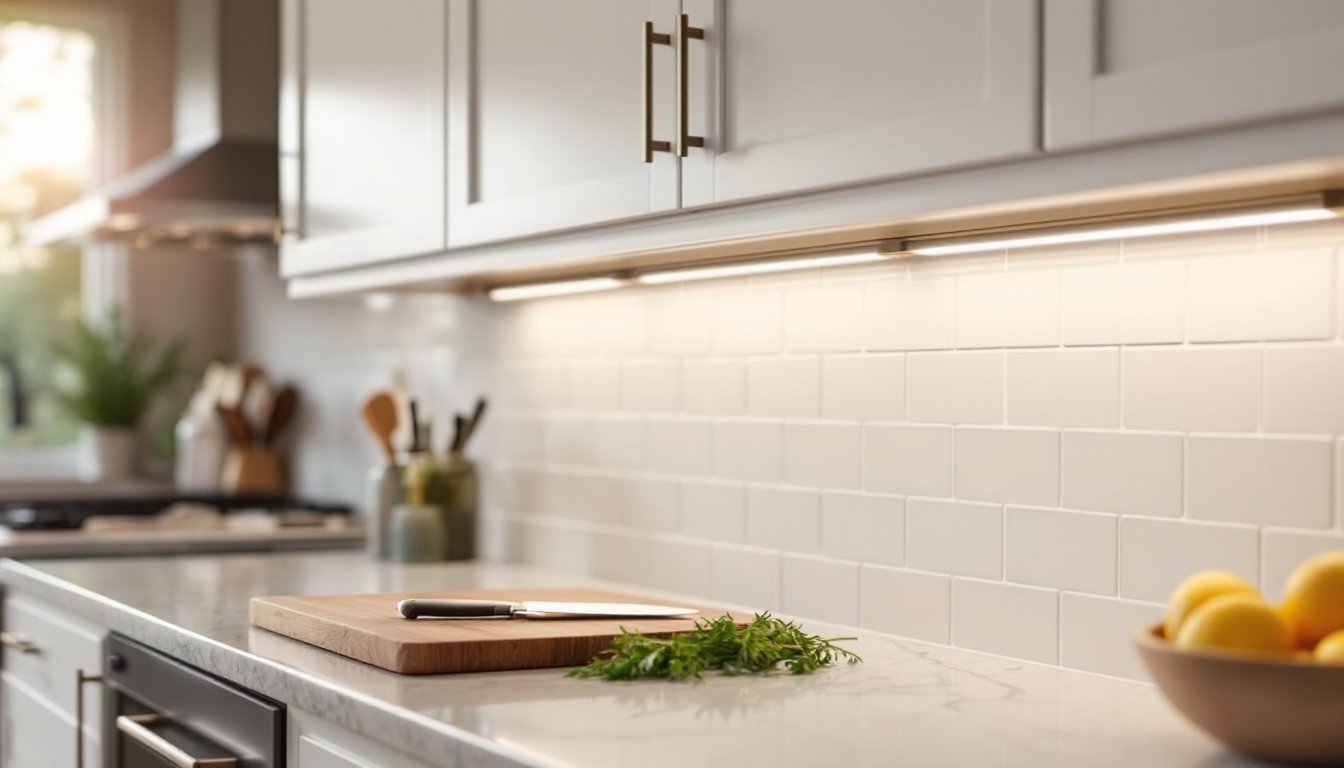
Kitchens with soffits or dropped ceilings are prime candidates. Standard cans won’t fit above most soffits, but low profile fixtures tuck in cleanly. Space them 24 to 30 inches apart over countertops for even task lighting.
Basements with low joists benefit from the extra headroom. If you’re finishing a basement with 2×6 or 2×8 joists and want recessed lighting without losing ceiling height, low profile is often the only practical option.
Hallways and closets don’t need high lumen output, making them ideal for compact, low-wattage fixtures. A single 4-inch low profile light every 4 to 6 feet provides adequate illumination without over-lighting narrow spaces.
Bathrooms work well with low profile fixtures rated for damp or wet locations (check the UL listing). Install them outside the shower zone unless specifically rated for direct water exposure. For vanity lighting, experts at This Old House recommend pairing recessed lights with sconces to avoid harsh shadows.
Living rooms can use low profile fixtures for general ambiance or accent lighting. A thoughtful living room recessed lighting layout typically combines recessed fixtures with floor or table lamps to layer light and avoid the flat, commercial look of overhead-only lighting.
Avoid installing recessed lights, low profile or otherwise, directly above ceiling fans or in sloped ceilings steeper than 45 degrees without slope-rated housings.
How to Install Low Profile Recessed Lights (DIY Guide)
Safety first: Turn off power at the breaker panel and verify with a non-contact voltage tester. Wear safety glasses and work on a stable ladder.
Tools and materials you’ll need:
- Low profile recessed fixture(s)
- Drywall saw or hole saw (sized to fixture diameter)
- Wire stripper and screwdriver
- Non-contact voltage tester
- Pencil and tape measure
- Junction box (if not already present)
Step-by-step installation:
-
Plan your layout. Measure and mark ceiling positions. A common rule: space fixtures at a distance equal to half the ceiling height. For an 8-foot ceiling, that’s roughly 4 feet apart. Figuring out where to place recessed lighting depends on room function and furniture layout.
-
Cut the ceiling hole. Use the template included with your fixture or trace the trim ring. Cut carefully with a drywall saw or hole saw. If you hit a joist, shift the location or notch the joist minimally (consult IRC guidelines, never remove more than 25% of joist depth).
-
Run electrical cable. If adding new circuits, run 14/2 or 12/2 NM cable (depending on circuit amperage) from the breaker panel or an existing junction box to each fixture location. Secure cable every 4.5 feet and within 12 inches of boxes per NEC Article 334. This is where many DIYers call in a licensed electrician, wiring mistakes can cause code violations or fire hazards.
-
Make electrical connections. Most low profile fixtures use quick-connect plugs. Strip about 1/2 inch of insulation from the black (hot), white (neutral), and bare or green (ground) wires. Match wire colors: black to black, white to white, ground to ground. Secure with twist-on wire connectors and tuck neatly into the junction box.
-
Mount the fixture. Push the fixture into the ceiling hole and engage the spring clips or mounting tabs. The trim should sit flush or nearly flush with the ceiling surface. Some models require a slight twist to lock.
-
Test and adjust. Restore power and test each fixture. If installing dimmable LEDs, confirm your dimmer switch is LED-compatible, standard incandescent dimmers often cause flickering or buzzing with LED loads.
Permit requirements: Adding new electrical circuits or modifying existing ones typically requires a permit and inspection in most jurisdictions. Replacing existing fixtures on the same circuit usually doesn’t, but verify with your local building department. Professionals at Fine Homebuilding emphasize that unpermitted electrical work can complicate home sales and insurance claims.
Choosing the Right Low Profile Recessed Lighting for Your Space
Lumen output drives brightness. For general ambient lighting, aim for 50 to 75 lumens per square foot. A 120-square-foot bedroom needs roughly 6,000 to 9,000 total lumens, achieved with six to eight 800-lumen fixtures spaced evenly.
Color temperature affects mood. 2700K mimics warm incandescent light, ideal for bedrooms and living areas. 3000K works well in kitchens and baths. 4000K skews neutral-to-cool, better suited for task-heavy spaces like garages or workshops.
CRI (Color Rendering Index) measures how accurately colors appear under the light. Look for CRI 90 or higher in spaces where color matters, kitchens, bathrooms, art display areas. Lower CRI fixtures (80–85) are fine for hallways and closets.
Dimming compatibility adds flexibility. Not all low profile LEDs dim smoothly: check the spec sheet for dimmer compatibility. Pair fixtures with a Lutron, Leviton, or similar LED-rated dimmer to avoid flicker and extend fixture life.
Wet or damp ratings matter in bathrooms and covered outdoor areas. Damp-rated fixtures handle humidity: wet-rated fixtures tolerate direct water contact (rare in residential ceilings). UL listings clarify these ratings.
Brand considerations: Bob Vila suggests looking for fixtures from manufacturers with strong warranty support, 5 to 10 years is standard. Models from Halo, Lithonia, and Commercial Electric are widely available and well-documented, making replacement parts easier to source if needed.
Conclusion
Low profile recessed lighting isn’t a workaround, it’s a smart solution for real-world ceiling constraints. Whether you’re retrofitting a basement, updating a kitchen soffit, or just want a cleaner install, these fixtures deliver the performance of traditional cans in a fraction of the space. Stick to proper spacing, respect electrical codes, and don’t skimp on quality. The result is lighting that disappears into your ceiling and just works.